The Pavement Directory

State pavement directory

Pavement Contractors in Vermont

Most states regulate what you do to a parking lot. Vermont also regulates the parking lot. Alongside the construction stormwater permit that applies while work is underway, the state operates an operational stormwater permitting program covering discharges from impervious surfaces above a size threshold set in state rule — meaning a lot can carry an ongoing permit obligation whether or not anyone is currently working on it. For owners of larger commercial properties here, that reframes pavement from a maintenance expense into a compliance asset.

The physical setting is equally particular. Vermont has very few large flat sites, thin till over bedrock across much of the Green Mountains, a mud season that takes weeks out of the calendar, and a small number of asphalt plants serving a state where a forty-mile haul over a gap road is routine. Those constraints, more than any material choice, shape what is realistic on a Vermont pavement project.

Listings
19
Cities
0
Services
14
Search Vermont

Before you hire: The Pavement Directory does not guarantee contractor performance, pricing, licensing, insurance, or availability. Business information may be submitted by contractors or gathered from public sources and should be independently verified before hiring. Always confirm licensing, insurance, references, scope of work, and written contract terms.

19 contractors in Vermont

Filter by service
All Things Asphalt, LLC logo

West Charleston, Vermont

Asphalt PavingSealcoatingCrack SealingCommercial & Residential

All Things Asphalt, LLC is a full-service asphalt paving company founded in 2021 by owner Jordan Mead, who brings 15 years of commercial paving experience from major Vermont contractors. The company serves residential and commercial clients throughout Northern Vermont and New Hampshire, offering paving, sealcoating, crack filling, repairs, and gravel driveway services. The company maintains professional certifications including flagger and CPR training.

(802) 323-2922Website on file
Alternative Paving logo

Mendon, Vermont

Concrete RepairAsphalt PavingCommercial & Residential

Alternative Paving specializes in decorative concrete installation, repair, and renewal services including stamped concrete, concrete staining, epoxy flooring, concrete polishing, quartz flake floors, concrete resurfacing, and concrete removal. The company serves residential and commercial properties such as garages, basements, pool decks, patios, and walkways throughout Vermont and New England. Established in 2006 with over 15 years of concrete experience, the company operates from Mendon, Vermont and services projects up to 100 miles from its location.

(802) 773-9875Website on file
Bouchards Paving and Sealing logo

Williamstown, Vermont

Asphalt PavingSealcoatingCrack SealingCommercial & Residential

Bouchard's Paving and Sealing is a family-owned asphalt contractor operating for 34 years in Vermont. The company provides hot rubber crack filling, sealcoating, patching, and paving services for driveways, parking lots, private roads, and town roads. It serves both residential and commercial clients.

(802) 309-2942Website on file
Asphalt PavingSealcoatingCrack SealingCommercial & Residential

Brown's Driveway Paving & Sealing Inc. is a family-owned business based in Troy, Vermont, providing asphalt services to residential, commercial, and municipal clients throughout northern Vermont. The company offers paving, seal coating, crack sealing, line striping, and patchwork services. With over 40 years of combined experience, the team uses locally-made hot top asphalt products and environmentally friendly polymer-modified sealers.

(802) 744-9984Website on file
Asphalt PavingSealcoatingCrack SealingCommercial & Residential

D & F Excavating & Paving Inc. provides asphalt paving, sealcoating, crack filling, and excavation services for commercial, residential, and municipal properties. The company manufactures virgin asphalt and crushed stone, operates an asphalt plant and gravel pit, and offers site preparation, drainage work, and specialized paving for parking lots, driveways, courts, and golf courses. Operating since 1974 in the Middlebury area.

(802) 388-2338Website on file
DMI Paving Inc logo

Brattleboro, Vermont

Asphalt PavingDrainage & SiteworkSnow RemovalCommercial & Residential

DMI Paving provides asphalt paving, patching, excavation, parking lot striping, snow removal, and trucking services to residential and commercial customers. Founded in 1977, the company self-performs critical work including earthwork, excavation, concrete, and asphalt paving. It serves clients throughout Vermont, New Hampshire, and Massachusetts.

(802) 258-3962Website on file
Asphalt PavingConcrete RepairSealcoatingCommercial & Residential

Freshcoat Sealcoating & Line is a locally owned asphalt contractor providing paving, sealcoating, crack sealing, pothole repair, and parking lot line striping throughout Vermont. The company serves both residential driveways and commercial properties including parking lots and municipal roads. Services include hot rubber crack sealing, pavement maintenance programs, ADA-compliant parking lot striping, and stencil work.

(802) 735-7659Website on file
Green Mountain Paving logo

Orange, Vermont

Asphalt PavingCommercial & Residential

Green Mountain Paving is a family-owned asphalt paving and sealcoating contractor based in Orange, Vermont. The company has been owned and operated by the Comstock family for nearly 45 years and has served Vermonters for over 53 years total. They specialize in driveway paving and maintenance, emphasizing long-term customer relationships and quality workmanship.

(802) 479-0600Website on file
GW Paving Inc logo

Rutland, Vermont

Asphalt PavingDrainage & SiteworkCommercial & Residential

GW Paving Inc is a family-run asphalt paving and maintenance company owned and operated by Gary Wells Sr. The company specializes in asphalt paving, seal coating, and asphalt maintenance for both residential and commercial projects throughout Vermont. With over 40 years of experience and state-of-the-art equipment, GW Paving serves all of Vermont including Rutland, Colchester, and surrounding counties. The company emphasizes quality workmanship and customer service.

(802) 598-5025Website on file
Hungerford Paving logo

St Albans City, Vermont

Asphalt PavingConcrete RepairDrainage & SiteworkCommercial & Residential

Hungerford Paving is a locally owned asphalt paving contractor operating in Vermont. The company provides residential driveway paving, commercial and municipal parking lot paving, excavating and grading services, and snow removal. The company offers a one-year warranty on materials and labor and provides free estimates. The site features numerous project photos and customer testimonials.

(802) 828-7283Website on file
JC Paving LLC logo

St Albans City, Vermont

Asphalt PavingCommercial & Residential

JC Paving LLC is a locally owned and operated asphalt paving contractor serving Franklin County and Northern Vermont. The company provides custom paving solutions for residential driveways, commercial parking lots, sidewalks, and agricultural properties. JC Paving emphasizes high-quality materials, professional equipment, and dedicated craftsmanship with competitive pricing and a focus on customer satisfaction.

(802) 524-7283Website on file
Northeast Paving and Sealing logo

Derby Line, Vermont

Asphalt PavingConcrete RepairCommercial & Residential

This website, originally registered under a name suggesting an asphalt paving and concrete repair business in Derby Line, Vermont, is currently a parked domain listed for sale. The visible content is a generic appliance repair referral and pay-per-call service unrelated to pavement or concrete work. No verifiable information about the original paving business's services, licensing, or service area is present on this page.

(802) 323-9355Website on file
O'Brien Paving logo

Jamaica, Vermont

Asphalt PavingCommercial & Residential

O'Brien Paving has provided asphalt paving services in southern Vermont since 1997. The company handles residential driveways, commercial parking lots, roads, tennis and basketball courts, and offers year-round hot asphalt repair. Additional services include asphalt recycling, gravel roadway installation, driveway maintenance and sealing, and trucking and grading services.

(802) 874-7250Website on file
Premier Paving Inc logo

Milton, Vermont

Asphalt PavingDrainage & SiteworkCommercial & Residential

Paving Inc. is a family-owned asphalt paving contractor established in 2000 and based in Georgia, Vermont. The company offers asphalt paving, sealcoating (asphalt protection), excavation, and site preparation for residential and commercial properties. Owner Randy Howard brings over 38 years of industry experience. The company serves Milton, Georgia, Essex Junction, Burlington, Williston, Colchester, and surrounding areas, and provides free estimates.

(802) 524-0399Website on file
R G Paving logo

Williamstown, Vermont

Asphalt PavingSealcoatingCommercial & Residential

R G Paving is an asphalt paving contractor based in Williamstown, Vermont, specializing in driveway paving, commercial parking lot paving, sealcoating, and asphalt repair. The company serves residential and commercial customers throughout Central Vermont, including Orange, Washington, and Chittenden Counties. Services include paving and repaving driveways, laying gravel and plant mix, seal coating, paving small roads, and repairing cracks and other damage. Operating since 1993.

(802) 433-1665Website on file
Rox Asphalt LLC logo

Georgia, Vermont

Asphalt PavingDrainage & SiteworkConcrete RepairCommercial & Residential

Rox Asphalt is a fourth-generation asphalt contractor operating since 1996 with locations in Williston and Georgia, Vermont. The company provides paving, sealcoating, crack filling, resurfacing, infrared repairs, and site work for residential, commercial, and municipal properties. Services include driveway, parking lot, and roadway installation, as well as maintenance and repair work throughout the Greater Burlington area and Northern Vermont.

(802) 864-3921Website on file
S T Paving Inc logo

Waterbury, Vermont

Asphalt PavingCommercial & Residential

S.T. Paving, Inc. is a locally owned and operated asphalt paving company with 50 years of experience. The company provides complete paving services including driveway installation, parking lot construction, road paving, and sport court construction (tennis, pickleball, basketball). All work is performed in-house with no subcontracting, using state and federally approved materials and regularly maintained equipment. Most staff have been with the company for over 10 years.

(802) 244-7861Website on file
Asphalt PavingSealcoatingCrack SealingCommercial & Residential

Supreme Sealcoating & Linestriping LLC provides commercial and residential pavement services including sealcoating, line striping, asphalt patchwork, hot rubber crack repair, gravel and ledge pack driveways, and sign installation. The company has over 25 years of experience in pavement maintenance and serves both parking lots and residential driveways in the Lunenburg, Vermont area.

(603) 631-1773Website on file
Vermont Roadworks LLC, WBE logo

Brattleboro, Vermont

Asphalt PavingParking Lot StripingSnow RemovalCommercial & Residential

Vermont Roadworks LLC is a woman-owned, HUBZone-certified asphalt paving and maintenance contractor established in 2014. The company serves commercial, residential, and government clients throughout Vermont with services including paving, crack sealing, seal coating, line striping, pothole repair, snow removal, and seasonal property maintenance. Leadership includes CEO Tara Cheney and COO Fred Cheney. The company emphasizes green initiatives and safety practices.

(802) 579-1911Website on file

What makes pavement work different in Vermont?

Vermont treats existing impervious surface as something that can carry its own permit, and the mountains treat every schedule as negotiable.

  • Vermont's operational stormwater permitting covers discharges from impervious surface above a threshold set in state rule, so an existing parking lot can carry an ongoing obligation independent of any construction work.
  • Act 250 land use review can apply to development and redevelopment projects, and whether pavement work falls within an existing permit's conditions is worth checking before pricing.
  • Vermont registers residential contractors through the Office of Professional Regulation, which is a verifiable registration rather than a competency license — confirm what it does and does not establish.
  • Mud season removes several weeks of workable calendar and leaves the subgrade at its weakest, which is why structural repairs are timed rather than scheduled.
  • Plant availability and haul distance over mountain routes constrain more Vermont projects than crew capacity does.

Pavement Conditions by Region in Vermont

Vermont does not have one climate or one soil profile, and pavement that performs well in one part of the state can fail early a few hours away. These are the divisions that matter most when scoping paving, repair, or maintenance work.

The Champlain Valley

Burlington · South Burlington · Colchester · Middlebury · Vergennes

Environmental stress

  • The state's heaviest commercial traffic and largest lots
  • Substantial freeze-thaw cycling with regular winter rain-then-freeze events
  • Runoff draining to Lake Champlain, where water quality requirements are stringent

Subgrade conditions

  • Marine and lacustrine clay left by the Champlain Sea, soft and highly moisture-sensitive
  • Sand and gravel terraces above the clay in places
  • Fill on long-developed parcels in the Burlington area

Common distress

  • Frost heave and settlement in the clay lowlands
  • Alligator cracking where drainage cannot get water off the site
  • Rutting at drive-through lanes and loading areas on large commercial lots

What it means for the work

  • This is the deepest contractor and supplier market in the state and the easiest to schedule in
  • Champlain Valley clay behaves nothing like mountain till and needs its own section design
  • Phosphorus and water quality requirements in the lake basin can reach redevelopment projects

The Green Mountain spine

Stowe · Killington · Warren · Manchester · Ludlow

Environmental stress

  • Heavy snowfall with long plowing and sanding seasons
  • Deep frost penetration and severe freeze-thaw cycling at elevation
  • Steep grades concentrating snowmelt and stormwater across pavement

Subgrade conditions

  • Thin, stony till over bedrock at shallow depth
  • Saturated ground at the toe of slopes and below cut faces
  • Frost-susceptible fines in valley bottoms and old wetland margins

Common distress

  • Severe frost heave and spring break-up
  • Washout and undermining where runoff crosses a pavement edge on a grade
  • Plow damage at edges, joints, and raised structures

What it means for the work

  • The workable season at resort elevations is materially shorter than in the Champlain Valley
  • Snow storage and meltwater routing belong in the layout rather than in an operations conversation later
  • Steep-site drainage work regularly costs more than the paving it is protecting

The Connecticut River valley and eastern Vermont

White River Junction · Brattleboro · Springfield · St. Johnsbury

Environmental stress

  • Cold winters with substantial frost penetration
  • Riverine flooding on valley-floor parcels
  • Regional through-traffic on the interstate corridors

Subgrade conditions

  • Silty terrace deposits and alluvium along the river
  • Dense glacial till on the valley walls
  • Fill on older mill and industrial parcels

Common distress

  • Frost heave in fine-grained terrace soils
  • Settlement on filled or low-lying valley sites
  • Base saturation where water has no positive outlet

What it means for the work

  • Floodplain status can change what is permissible on a site and is worth confirming early
  • Silty terrace soils are frost-susceptible and usually need a thicker granular section
  • Some sites here are served more easily from across the river than from within Vermont

The Northeast Kingdom

Newport · Lyndonville · Derby · Island Pond

Environmental stress

  • The state's coldest winters and deepest frost
  • A construction season compressed at both ends
  • Heavy seasonal loading from forestry and agriculture

Subgrade conditions

  • Stony till over bedrock across much of the region
  • Frost-susceptible fines in low areas and old field drainage
  • Limited local aggregate sources in parts of the region

Common distress

  • Regularly spaced transverse cracking from cold contraction
  • Recurring heave in the same footprint each spring
  • Break-up at entrances and turning areas used by loaded trucks

What it means for the work

  • Haul distance from the nearest working plant is often the binding constraint on feasibility
  • Binder selection for the actual low-temperature extreme matters more here than in the south
  • Farm and logging loads should drive the section at entrances, not the parking field beside them

Southern Vermont and the Taconics

Bennington · Rutland · Wilmington · Dorset

Environmental stress

  • Freeze-thaw cycling with more mid-winter thaw events than the north
  • Weekend traffic surges at second-home and tourism properties
  • Concentrated runoff on hillside and roadside parcels

Subgrade conditions

  • Marble and limestone belts with variable rock depth in the valleys
  • Rocky till over bedrock on the ridges
  • Poorly drained pockets between rock outcrops

Common distress

  • Cracking where a section crosses from rock to soil subgrade over a short distance
  • Edge erosion where runoff leaves the pavement onto a steep shoulder
  • Frost heave at transitions and around buried structures

What it means for the work

  • Rock depth can change several feet across a parcel, so test pits are worth the cost before pricing
  • Weekend occupancy patterns at tourism properties determine when a lot can be closed
  • Mid-winter thaws here produce more freeze-thaw crossings than the Kingdom sees

Common Pavement Problems in Vermont

Frost heave over frost-susceptible till and clay

Ridges lifting the pavement through late winter in the same places each year, mostly settling back by early summer and leaving a wider crack behind each cycle.

Likely causes

  • Silty till and Champlain Valley clay in which freezing water forms ice lenses
  • Water sitting in the subgrade with no route out
  • Too little clean granular material between the pavement and the frost-susceptible layer
  • Frost penetrating unevenly where materials or buried structures change

When to get it looked at: Once the same ridge has returned two winters running, the answer is in the subgrade. Milling and overlaying buys a smooth surface for one season and reproduces the ridge in the identical footprint the next.

Mud season subgrade weakness

Ruts and soft spots forming under ordinary traffic during a few weeks in spring, in areas that carried the same vehicles through winter without a problem.

Likely causes

  • The surface thawing before the ground beneath it, trapping meltwater in the base
  • Fine-grained soils losing most of their strength when saturated
  • Delivery and service traffic arriving during the weakest weeks of the year
  • Drainage that cannot move meltwater off a site fast enough

When to get it looked at: Structural repairs placed during mud season generally do not hold. If damage is limited to a few weeks each spring, the useful work is drainage rather than surface repair.

Runoff erosion and undermining on graded slopes

Gullies forming at the low edge of a hillside lot, material washing out from beneath the pavement, and the edge dropping over one or two seasons.

Likely causes

  • Concentrated runoff leaving the pavement at a single point rather than spread along the edge
  • No designed outfall or energy dissipation at the discharge
  • Snowmelt volumes exceeding what the grading was set up to carry
  • Steep terrain giving water a short distance to gather speed

When to get it looked at: If the same edge has been rebuilt more than once, the discharge point is the problem. Repairing the edge again produces the same result on the same schedule.

Low-temperature transverse cracking

Straight cracks running across the pavement at roughly even spacing, unrelated to traffic patterns, most pronounced in the Northeast Kingdom and at elevation.

Likely causes

  • Extreme cold contracting the asphalt until it cracks in tension
  • A binder grade selected for a statewide default rather than the site's actual winter low
  • Aged, oxidized binder with reduced ability to relax stress
  • Cracks left open so water reaches the base and widens them each cycle

When to get it looked at: Evenly spaced transverse cracks are a sealing question while they stay tight. Once water is reaching the base through them, they become a structural conversation.

Neglected stormwater treatment practices

A swale, basin, or gravel wetland installed as part of an earlier approval that has silted in, grown over, or been used for snow storage, so it no longer performs the function it was permitted for.

Likely causes

  • No maintenance responsibility assigned when the property changed hands
  • Plowed snow and sand stockpiled in or beside the practice
  • Sediment accumulation from the contributing pavement never removed
  • Landscaping decisions made without knowing the feature was a permitted practice

When to get it looked at: Before any pavement project, find out whether the site has permitted stormwater practices and what their maintenance obligations are. Repaving around a failed practice does not resolve the obligation.

Paving and Maintenance Calendar for Vermont

Treat this as a planning aid, not a rule. Whether a given treatment can actually be placed on a given day depends on product requirements, surface and nighttime temperatures, the rain forecast, humidity, plant availability, the project specification, and the contractor’s means and methods.

Winter

Work often suited to this window

  • Snow and ice operations and watching for damage as it develops
  • Emergency pothole and trip hazard repair
  • Assessment, budgeting, and permit work ahead of the construction season

Scheduling risks

  • Paving and surface treatments are generally out of season statewide
  • Snow cover conceals developing damage until the melt
  • Permit review timelines mean spring work needs winter paperwork

Inspect for: Note where plowed snow is being stockpiled — particularly whether it is going into or beside a permitted stormwater practice — and trace where the meltwater will run.

Regional exception: Southern Vermont sees more mid-winter thaw events than the Northeast Kingdom, which produces more freeze-thaw crossings and more mid-season damage.

Mud season

Work often suited to this window

  • Damage assessment as the surface becomes visible
  • Temporary patching and safety repairs only
  • Confirming scope and securing material and crew commitments

Scheduling risks

  • Subgrade strength is at its annual low, so structural work placed now is unreliable
  • Posted weight limits affect hauling and material delivery
  • Soft ground restricts equipment access on unpaved parts of a site

Inspect for: Map exactly where the surface failed and compare with last year — anywhere that repeats is pointing at drainage or base rather than at the winter.

Construction season

Work often suited to this window

  • Paving, reclamation, and full-depth structural repair
  • Drainage corrections, structure resetting, and grading
  • Sealcoating, striping, and accessible route work

Scheduling risks

  • The window is short and books out early, and a missed slot can mean a full year's wait
  • Plant availability and haul distance limit which sites can be served on a given day
  • Resort and tourism properties frequently cannot close a lot during peak periods

Inspect for: Walk drive aisles and loading areas in the warmest part of the day, when rutting and shoving are visible rather than inferred from a cool-morning walk.

Regional exception: At Green Mountain resort elevations the usable portion of this window is noticeably narrower than in the Champlain Valley at both ends.

Fall

Work often suited to this window

  • Crack sealing ahead of sustained freezing
  • Completing paving while conditions still allow it
  • Clearing catch basins, swales, culverts, and stormwater practices before winter

Scheduling risks

  • Overnight temperatures at elevation close the window several weeks earlier than in the valley
  • Whether a given day works depends on the product's stated requirements, surface and night temperatures, humidity, and the rain forecast rather than the calendar date
  • Disturbed ground left unstabilized becomes an erosion problem at the spring melt

Inspect for: Confirm cracks are sealed, structures are clear, and any permitted stormwater practice has been cleaned out before the ground freezes.

Contractor Licensing and Verification in Vermont

Statewide licensing
Depends on scope and project value
Administering body
Vermont Secretary of State — Office of Professional Regulation (residential contractor registration)

Vermont does not issue a statewide license specific to commercial asphalt paving, sealcoating, concrete, or parking lot contracting. For a shopping center, resort property, or industrial site there is generally no state paving credential to look up, so verification rests on the entity, its insurance, and its record.

Residential work is treated differently. Vermont requires contractors performing residential construction work above a value threshold set in state law to register with the Office of Professional Regulation, and that registration is verifiable through the Secretary of State. Confirm the current threshold with the state rather than assuming a driveway job falls above or below it. Registration is an administrative filing with insurance requirements attached — it establishes that a contractor met those entry requirements, not that they have built comparable pavement.

Verify the entity and the coverage independently. Check that the exact name on the proposal is registered with the Secretary of State and matches the insurance certificate and the contract, and confirm general liability and workers' compensation directly with the carrier for the dates of your work. On Vermont projects where striping, concrete, or drainage work is subcontracted, ask whether those firms carry their own coverage.

Municipal zoning and site plan review apply on top of any of this, and public projects carry separate bidding and bonding rules. Because Act 250 review can also attach to a property, ask whether the site holds an existing land use permit whose conditions reach the work you are planning.

What a contractor license does not prove

Residential contractor registration in Vermont confirms a filing and insurance, not competence on a mountain site, a clay subgrade, or a property carrying stormwater permit conditions. References on comparable Vermont work carry more weight than the registration does.

  • That the proposed scope is the right fix for what is actually failing
  • That the price is fair for the local market
  • That drainage has been designed or corrected
  • That the pavement section and thickness suit the traffic the property carries
  • That the specified materials are appropriate for the site
  • That the crew will show up when promised
  • That workmanship will hold up past the first winter or summer
  • That the company is financially stable enough to honor a warranty

Ask for a certificate of insurance sent directly from the carrier or agent rather than a copy forwarded by the contractor, confirm the general liability and workers’ compensation coverage is active on the dates of your work, and ask to be named as certificate holder so you are notified if the policy lapses.

Licensing requirements can turn on project value, scope of work, property location, and whether the job is public or private. City and county rules may add registration, permitting, or bonding requirements beyond anything required at the state level. Verify current requirements with the agency directly before contracting.


Last reviewed:

Stormwater and Environmental Considerations

Vermont DEC administers construction stormwater permitting for projects that disturb enough ground, with erosion prevention and sediment control requirements scaled to the project. That much resembles most states. What differs is the second program: Vermont also issues operational stormwater permits covering discharges from impervious surface above a threshold set in state rule, which means an existing parking lot can carry an ongoing permit obligation with no construction happening at all. Properties brought into that program are generally required to meet current treatment standards, which can turn a resurfacing conversation into a site design conversation.

Act 250 is the other Vermont-specific layer. The state's land use review applies to qualifying development and redevelopment, and many commercial properties already operate under an existing Act 250 permit with conditions attached — sometimes including conditions about parking, impervious area, drainage, or landscaping. Before pricing an expansion or a reconfiguration, it is worth finding out whether the property holds a permit and whether the planned work falls inside or outside its terms.

Municipal zoning and site plan review apply as well, and in the Lake Champlain basin phosphorus-related requirements can reach redevelopment work. During construction the practical items are the familiar ones: protecting inlets and structures, controlling sediment tracked off the site, keeping material out of swales and basins, and stabilizing disturbed ground before the season closes so the spring melt does not carry it away.

What tends to drive requirements here

  • Whether the property's existing impervious area brings it under operational stormwater permitting
  • Whether an existing Act 250 permit carries conditions that reach the planned work
  • Disturbed area thresholds for construction stormwater permit coverage
  • Phosphorus and water quality requirements in the Lake Champlain basin
  • Maintenance obligations attached to any permitted stormwater treatment practice on the site
  • Stabilizing disturbed ground before winter, ahead of spring melt runoff

Vermont's operational stormwater thresholds, construction thresholds, and Act 250 jurisdiction each have their own triggers, and municipal review applies on top of them. Confirm what applies to your parcel with Vermont DEC, the Natural Resources Board, and the town before design.

Last reviewed:

Pavement Terms You May Encounter in Vermont

TermWhat it means on a Vermont project
Operational stormwater permitA permit covering the discharge from a property's existing impervious surface rather than from construction activity. Where it applies, the parking lot itself is the regulated thing, and meeting current treatment standards can become part of a redevelopment.
Act 250 permitVermont's land use approval for qualifying development. Many commercial properties already hold one, and its conditions can reach parking, impervious area, drainage, or landscaping in ways that affect what pavement work is permissible.
Subbase of dense graded crushed stoneThe compacted granular layer beneath the asphalt. In a state with this much frost, its thickness and cleanliness usually determine pavement life more than the surface course does.
Frost-susceptible soilFine-grained material in which freezing water forms ice lenses that lift pavement. Locating it and replacing it at transitions is what stops the same ridge reappearing every March.
Mud seasonThe spring weeks when thawing ground is saturated and at its weakest. It is a real constraint on hauling, access, and structural repair, not a colloquialism.
Gravel wetland and stormwater treatment practiceEngineered features installed to treat runoff under a permit. They carry maintenance obligations that transfer with the property, and using one for snow storage is a common way to put a site out of compliance.
Full-depth reclamationPulverizing the existing asphalt with the base, treating the blend, and repaving over it. It is well suited to Vermont sites where hauling material in and out over mountain routes would dominate the cost.

State transportation specifications can provide useful regional terminology and material references, but they do not automatically govern private parking-lot or driveway projects unless incorporated into the contract or required by the applicable jurisdiction.

More definitions are in the pavement glossary.

Common Pavement Projects in Vermont

Ski areas and mountain resort properties

Base area lots take their heaviest loading and their worst plow damage during the months when nothing can be repaired, so all remedial work compresses into a summer window that is already short at elevation.

Champlain Valley retail and commercial centers

Large lots over soft lake clay in a watershed with stringent water quality requirements, where a reconfiguration can pull the property into stormwater treatment obligations it did not previously carry.

Dairy farms and agricultural facilities

Tank trucks, feed deliveries, and equipment impose heavy loads on yards and approaches built for far less, and the traffic continues through mud season when the ground is weakest.

Colleges, hospitals, and state facilities

Institutional campuses combine constant occupancy with accessible routes that cannot be interrupted, and public work brings bidding and bonding requirements that private projects do not carry.

Second-home and inn properties in southern Vermont

Occupancy peaks on weekends and in foliage and ski seasons, which leaves narrow midweek and shoulder-season windows for work on lots that are often steep and tightly constrained.

Questions to Ask a Paving Contractor in Vermont

Vermont pavement FAQs

Can my Vermont parking lot need a permit even when no work is happening?

Yes, and it surprises a lot of owners. Vermont operates an operational stormwater permitting program that covers discharges from impervious surface above a threshold set in state rule, so a property can carry an ongoing obligation attached to the pavement itself rather than to a construction project. Properties brought into the program are generally expected to meet current treatment standards, which can mean the answer to "can we just resurface it" involves site design rather than only paving. Confirm your property's status with Vermont DEC before scoping a project.

Does Act 250 affect a parking lot project?

It can, in two ways. A large enough development or redevelopment can require Act 250 review in its own right, and separately, many Vermont commercial properties already operate under an existing Act 250 permit whose conditions touch parking counts, impervious area, drainage, or landscaping. Work that seems purely like maintenance can still fall outside those conditions if it changes the layout or the paved footprint. Checking whether the property holds a permit, and what it says, is a cheap step early and an expensive discovery late.

Does Vermont license paving contractors?

Not for commercial work. There is no statewide Vermont license specific to paving, sealcoating, concrete, or parking lot contracting on a commercial property. Contractors performing residential construction above a value threshold set in state law are required to register with the Office of Professional Regulation, and that registration is verifiable through the Secretary of State. It confirms a filing and insurance requirements were met — it does not establish that a contractor has built pavement on a mountain site or over lake clay, which is what usually matters here.

What actually happens to pavement during mud season?

The surface thaws before the ground beneath it does, so meltwater gets trapped in the base by soil that is still frozen below. A saturated base has a fraction of its usual strength, and traffic the pavement carried all winter starts pushing material around. That is why posted weight limits appear on public roads at the same time, and why structural repairs placed during those weeks tend not to hold. If your damage is concentrated in those weeks every year, drainage is the productive thing to work on rather than annual patching.

Why does haul distance matter so much on Vermont projects?

Because there are relatively few asphalt plants serving a state with mountain routes between them and many of its properties. Asphalt has to reach the paver within a workable temperature range, and a long haul over a gap road narrows the margin the crew has to place and compact it properly, particularly at the edges of the season. It also limits loads per day, which affects both cost and sequencing. On a site away from the Champlain Valley or the interstate corridors it is a fair question to ask a contractor directly.

Why is there a silted-in basin behind my building that nobody maintains?

It is very likely a permitted stormwater treatment practice installed as a condition of an earlier approval, and its maintenance obligation transferred with the property whether or not anyone mentioned it at closing. Sediment accumulation, overgrowth, and snow storage are the three most common ways these features stop working. Before planning pavement work, find out what practices exist on the site and what they are required to do — repaving around a failed practice does not discharge the obligation, and the pavement work is often the natural time to restore it.

Is crack sealing worth it in Vermont?

It is one of the better-value treatments available in a state with this much frost. Sealed cracks keep meltwater out of the base, which is exactly what drives the spring damage, and the cost is small against the potholes that unsealed cracks eventually produce. The timing matters more than the decision: cracks are at their widest when the pavement is cold, and the product carries its own temperature and moisture requirements, so a good contractor picks the window from conditions rather than working to a fixed calendar date.

When can paving be done in Vermont?

Broadly late spring through fall, with the Champlain Valley offering the most workable days and Green Mountain resort elevations and the Northeast Kingdom the fewest at both ends. No calendar date makes paving impossible on its own. What decides a given day is the specific product's stated requirements, surface and overnight temperatures, humidity, the rain forecast, plant availability, and the specification in play. In Vermont the practical constraint is often simply whether a crew and a plant slot can be had at all.

Browse services in Vermont

Related reading for Vermont property owners

Parking Lot Maintenance

Property-owner guide

Updated July 11, 2026

How to Create a Parking Lot Maintenance Plan

How to build a parking lot maintenance plan: inspecting condition, setting service cycles, prioritizing repairs, and budgeting over multiple years.

Read guide
Crack Sealing

Property-owner guide

Updated July 11, 2026

When Should You Seal Asphalt Cracks?

When to seal cracks in asphalt — which cracks to seal, the best time of year, why sealing early matters, and how crack sealing fits a maintenance schedule.

Read guide
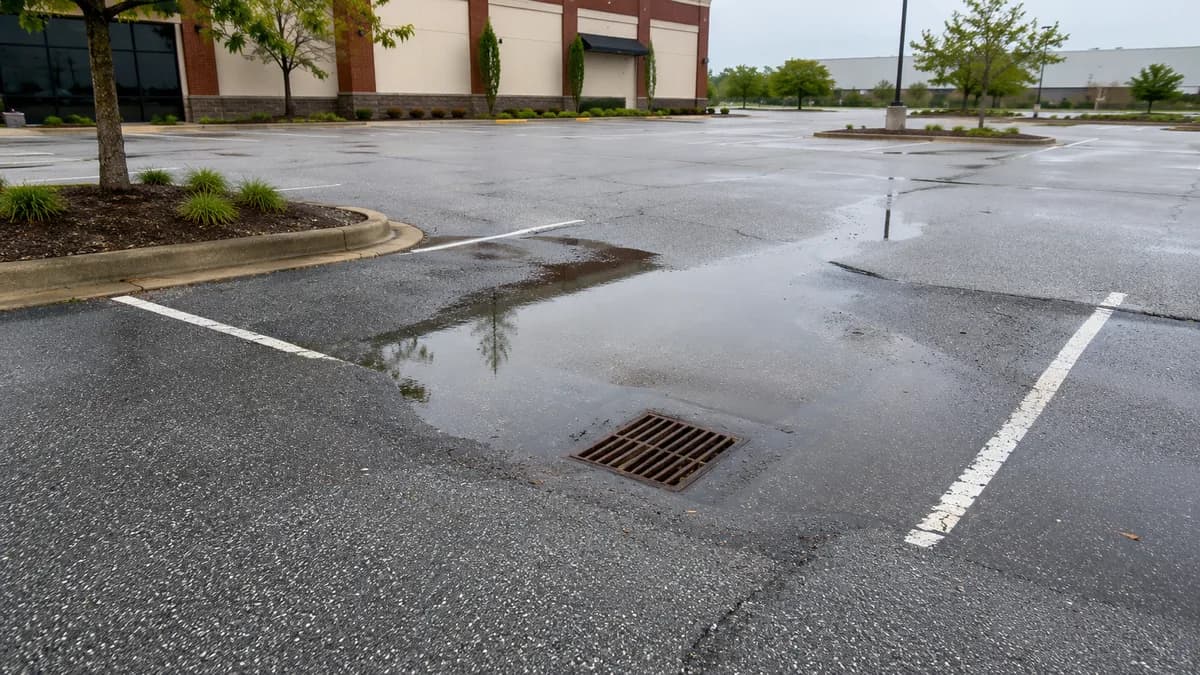
Water pooling in a low spot of a parking lot due to poor drainage.
Drainage & Sitework

Property-owner guide

Updated July 12, 2026

How Drainage Affects Pavement Life

Why drainage is the biggest factor in how long pavement lasts, how water damages asphalt from the base up, and why fixing it protects every repair.

Read guide
A parking lot catch basin and drain inlet reset flush with freshly placed asphalt, marked off with traffic barricades.
Contractor Hiring Guides

Property-owner guide

Updated July 12, 2026

How to Choose a Drainage and Sitework Contractor

How to choose a drainage and sitework contractor: one who diagnoses the cause of water problems and knows when an engineer is needed.

Read guide
Drainage & Sitework

Property-owner guide

Updated July 12, 2026

Grading and Slope Basics for Pavement

Grading and slope basics for pavement: what positive drainage means, why slope matters, common grading problems, and where engineering comes in.

Read guide
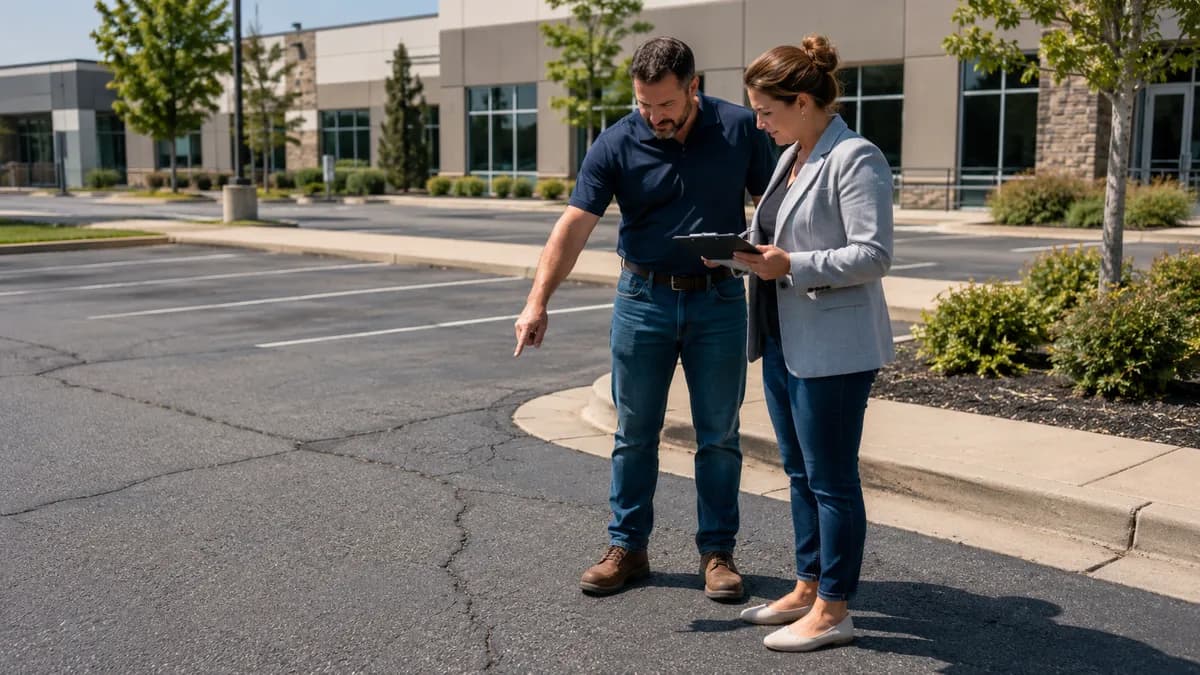
Property manager and asphalt paving contractor reviewing a cracked commercial parking lot together.
Contractor Hiring Guides

Property-owner guide

Updated July 6, 2026

How to Choose an Asphalt Paving Contractor

How to choose an asphalt paving contractor: project fit, relevant experience, written scope, references, insurance, and pavement qualifications.

Read guide

Vermont Agencies and Reference Links

This page summarizes publicly available information for general education. It is not legal, engineering, or code-compliance advice, and requirements change. Confirm anything that affects your project with the agency with jurisdiction over the property.

Regulatory content last reviewed:

For contractors

Are you a pavement contractor in Vermont?

Get listed where property managers, owners, and facility teams search by state, city, and service.