The Pavement Directory

State pavement directory

Pavement Contractors in Rhode Island

Rhode Island is small enough that almost every commercial property in it sits within a short drive of tidewater, and that proximity does more work than the state's size suggests. Salt air reaches inland lots, coastal flooding affects properties well up the bay, and the Coastal Resources Management Council's jurisdiction extends further from the shoreline than most owners assume. A pavement project in Warwick and one in Woonsocket sit in the same state and in genuinely different regulatory situations.

The other thing that sets Rhode Island apart from its neighbors is that there is something to look up. Contractors performing work here are generally required to register with the state's Contractors' Registration and Licensing Board, and that registration is publicly searchable — which is more than can be said for commercial paving in Massachusetts or Connecticut. Add glacial outwash sand in the south, dense long-developed parcels in the Providence area, and ordinary New England freeze-thaw, and the shape of a Rhode Island project becomes clear.

Listings
33
Cities
3
Services
14
Search Rhode Island

Before you hire: The Pavement Directory does not guarantee contractor performance, pricing, licensing, insurance, or availability. Business information may be submitted by contractors or gathered from public sources and should be independently verified before hiring. Always confirm licensing, insurance, references, scope of work, and written contract terms.

33 contractors in Rhode Island

Filter by service
A-1 Paving logo

Portsmouth, Rhode Island

Asphalt PavingADA ParkingCommercial & Residential

A-1 Paving is an asphalt paving contractor operating for over 30 years. The company provides residential asphalt driveways, oil and stone driveways, paver accents, and custom walkways. It also serves commercial clients including schools, shopping malls, retail centers, and municipalities. Services include new paving, resurfacing, repairs, and maintenance.

(401) 291-1672Website on file
Allstate Sealcoating Inc. logo

Cranston, Rhode Island

Asphalt PavingSealcoatingCrack SealingCommercial & Residential

Allstate Sealcoating Inc. provides pavement maintenance services including sealcoating, crack filling, line striping, and asphalt repair for commercial and residential properties. Operating for over 20 years with a portfolio of more than 2,000 customers, the company serves Rhode Island, Massachusetts, and Connecticut. They use high-quality materials meeting federal specifications and offer free estimates.

(401) 826-2999Website on file
Anchor Paving & Seal Coating logo

North Providence, Rhode Island

Asphalt PavingConcrete RepairSnow RemovalCommercial & Residential

Anchor Paving & Seal Coating provides residential and commercial asphalt paving, seal coating, crack repair, and line striping services across Rhode Island, Massachusetts, and Connecticut. The company offers new installations, resurfacing, and maintenance work for driveways, parking lots, concrete sidewalks, and sport courts. Services include seal coating to protect asphalt from deterioration, professional line striping, crack sealing, and snow removal.

(401) 339-0378Website on file
Bill's Construction Inc logo

Warwick, Rhode Island

Asphalt PavingConcrete RepairDrainage & SiteworkCommercial & Residential

Bill's Construction Asphalt Paving Inc. provides asphalt paving, excavation, site preparation, and haul-away services for residential and commercial properties. Operating since 1979, the owner is present on every job. Services include new asphalt installations, driveway resurfacing, site prep, and debris removal across Rhode Island and surrounding Massachusetts areas.

(401) 785-1180Website on file
Bjorklund Paving & Construction logo

Providence, Rhode Island

Asphalt PavingSealcoatingCrack SealingCommercial & Residential

Bjorklund Paving & Construction provides paving, sealcoating, excavation, demolition, and snow plowing services for homes and businesses across Rhode Island and parts of Massachusetts. The company states it has served the region for over 40 years and is licensed, insured, and bonded. Its work includes driveway paving, parking lot paving, and asphalt repair for both residential and commercial clients.

(401) 871-9605Website on file
Asphalt PavingSealcoatingCrack SealingCommercial & Residential

Care One Asphalt Sealcoating is a locally owned contractor based in Warwick, RI, providing sealcoating, crack sealing, line striping, pothole patching, and sport surface services. The company serves both residential driveways and commercial parking lots across Rhode Island. It states it is licensed and insured and offers free estimates along with a price-match guarantee.

(401) 919-2992Website on file
Classic Seal Coating, Inc. logo

Johnston, Rhode Island

Asphalt PavingSealcoatingCrack SealingCommercial & Residential

Classic Seal Coating and Paving provides residential and commercial pavement services including seal coating, asphalt paving, hot rubberized crack filling, infrared crack detection, line striping, parking lot sweeping, and snow plowing. The company serves all of Rhode Island and Southeastern Massachusetts with equipment and expertise in pavement maintenance and repair.

(401) 273-6776Website on file
Cruz Construction Co. Inc. logo

Cumberland, Rhode Island

Asphalt PavingConcrete RepairDrainage & SiteworkCommercial & Residential

Cruz Construction Co. Inc. has operated since 1948, providing asphalt paving, concrete work, stamped asphalt, heated driveways, paver stones, retaining walls, and related services. The company serves both residential and commercial properties throughout Rhode Island, with additional capabilities in drainage systems, excavation, utilities, bulkheads, and demolition. The company emphasizes customer service and maintains an established reputation in the region.

(401) 727-3770Website on file
Custom Sealcoating logo

Warwick, Rhode Island

Asphalt PavingSealcoatingCrack SealingCommercial & Residential

Custom Sealcoating provides pavement maintenance services including sealcoating, hot crack sealing, asphalt patch repair, and parking lot striping for both residential and commercial properties. The company serves Rhode Island and Massachusetts and highlights ADA-compliant striping layouts as part of its commercial offerings. It positions itself as locally owned and operated, offering free estimates and an experienced crew.

(401) 641-7383Website on file
Asphalt PavingParking Lot MaintenanceSnow RemovalCommercial

KBS provides commercial exterior maintenance services at scale across North America, serving thousands of locations. Services include snow and ice removal, commercial landscaping, power washing, and parking lot maintenance with daily sweeping, portering, bird control, signage, and striping. The company works with sectors including hospitality, retail, warehousing, logistics, education, commercial properties, and manufacturing.

(401) 722-8111Website on file
Easternway Seal Coating logo

Woonsocket, Rhode Island

Asphalt PavingSealcoatingCrack SealingCommercial & Residential

Easternway Seal Coating provides asphalt sealcoating, crack filling, and asphalt repair services for driveways and parking lots. Based in Woonsocket, RI and Bellingham, MA, the company has operated for over 15 years serving both residential and commercial customers. Additional services include line striping for parking lots, with work highlighted through before-and-after project photos.

(508) 889-2126Website on file
Asphalt PavingSealcoatingCrack SealingCommercial & Residential

Frank E. Clynes, Inc. provides sealcoating, crack filling, paving, patching, and line striping services for driveways and parking lots throughout Southern New England. The company has been operating since 1968 and specializes in pavement maintenance and repair, including pothole repair, alligator crack treatment, and new pavement installation. Services also include traffic line markings and parking lot striping.

(401) 765-0333Website on file
Future Sealcoating Co logo

West Warwick, Rhode Island

SealcoatingCommercial & Residential

Future Sealcoating is a family-run asphalt maintenance company incorporated in 1987, providing sealcoating, parking lot maintenance, driveway maintenance, and roadway asphalt services throughout Rhode Island and surrounding areas. The company is OSHA certified and maintains regular communication with customers regarding their projects.

(401) 828-1329Website on file
Hartford Paving logo

Johnston, Rhode Island

Asphalt PavingConcrete RepairADA ParkingCommercial & Residential

Hartford Paving & Site Construction provides asphalt paving, concrete work, parking lot renovation, utility restoration, and site construction services. The company serves commercial clients, municipalities, utility companies, and general contractors throughout Rhode Island and New England. Founded in 1974 and family-operated for over 50 years, the company offers services including new construction, repairs, drainage improvements, striping, seal coating, and ADA compliance work.

(401) 942-8857Website on file
J. Perry Paving logo

Warwick, Rhode Island

Asphalt PavingSealcoatingConcrete RepairCommercial & Residential

J. Perry Paving provides asphalt driveway installation, parking lot paving, seal coating, and patio construction for residential and commercial customers throughout Rhode Island. Based in Warwick, the company reports over 20 years of experience in the paving trade. Their portfolio includes work for private homes, businesses, and other properties across the state, including projects on Block Island and golf courses.

(401) 732-1730Website on file
J&L Sealcoating LLC logo

Warwick, Rhode Island

Asphalt PavingSealcoatingCrack SealingResidential

J&L Sealcoating LLC is a pavement maintenance company based in Warwick, Rhode Island, offering asphalt sealcoating, crack sealing and filling, asphalt patching, and line striping. The company primarily serves residential driveway projects, as shown by its featured project gallery, and states it has completed over 1,200 asphalt projects and served more than 800 customers. It reports serving customers across Rhode Island, Massachusetts, and Connecticut.

(866) 935-2837Website on file
Johnson Paving logo

North Smithfield, Rhode Island

Asphalt PavingSealcoatingADA ParkingCommercial & Residential

Johnson Paving is a second-generation, family-owned asphalt paving company operating since 1977. The company provides driveway installation and replacement, patch work, walkways, parking lot paving, and sealcoating services for residential, commercial, and industrial properties. They serve all of Rhode Island with specialization in northern RI and Bristol County, MA. The owner Michael Johnson estimates all jobs and performs work on-site, and they offer a one-year warranty on new asphalt driveway installations.

(401) 765-3888Website on file
KCI PAVING AND CONCRETE logo

Smithfield, Rhode Island

Asphalt PavingSealcoatingCrack SealingCommercial & Residential

KCI Paving and Concrete provides asphalt paving, sealcoating, crack filling, line striping, and concrete work for commercial properties across New England. The company serves parking lots, retail centers, campuses, and garages with ADA-compliant layouts and designs. KCI emphasizes planning and coordination on active properties to minimize disruption.

(844) 524-7283Website on file
M & M Paving and Landscaping Inc logo

Coventry, Rhode Island

Asphalt PavingSealcoatingCrack SealingCommercial & Residential

M & M Paving and Landscaping Inc is a family-owned asphalt and blacktop paving contractor operating in Rhode Island since 1988. The company provides asphalt services including crack repair, driveway installation and repair, milling, patching, resurfacing, and sealcoating. It also offers blacktop installation and repair, parking lot services, curb and retaining wall installation, and specialized paving including line striping and paver installation. The company serves both residential and commercial properties throughout Rhode Island.

(401) 397-7662Website on file
Masterson Paving logo

Woonsocket, Rhode Island

Asphalt PavingSealcoatingCrack SealingCommercial & Residential

Masterson Paving is a fourth-generation, family-owned paving company offering asphalt installation, resurfacing, repair, and sealcoating for homes and businesses. The company serves driveways, parking lots, and commercial properties throughout Woonsocket, Rhode Island and nearby Massachusetts communities. With more than 20 years of industry experience, they emphasize proper grading and drainage to help pavement withstand regional weather conditions.

(508) 918-4352Website on file
Narragansett Improvement Co logo

Providence, Rhode Island

Asphalt PavingConcrete RepairDrainage & SiteworkCommercial & Residential

Narragansett Improvement Company manufactures hot mix asphalt and provides asphalt paving, construction services, pavement evaluation, drainage and utility work, and site development. The company operates a hot mix asphalt plant and gravel pit in Rhode Island, serving commercial and residential projects. All staff are OSHA 10 certified, and the company emphasizes safety and quality in its operations.

(401) 331-7420Website on file
Nu-Look Seal Coating Company, Inc. logo

Burrillville, Rhode Island

Asphalt PavingSealcoatingDrainage & SiteworkCommercial & Residential

Nu-Look Seal Coating Company provides asphalt paving, sealcoating, and parking lot striping services to residential and commercial customers across Rhode Island, Massachusetts, and Connecticut. Operating since 1987 under original ownership, the company offers driveway paving and sealcoating, commercial parking lot services, and crack filling.

(401) 232-0795Website on file
Patch It Paving logo

Cranston, Rhode Island

Asphalt PavingDrainage & SiteworkSealcoatingCommercial & Residential

Patch It Paving is a full-service asphalt paving and sealcoating company established in 1996, operating for over 25 years under original ownership. The company serves Rhode Island and surrounding areas with new asphalt construction, excavation and removal, sealcoating, crack filling, pothole repair, line striping, and stone driveways. It specializes in residential driveways and small to medium commercial parking lots.

(401) 996-6090Website on file
Pawtucket Hot Mix Asphalt Inc. logo

Pawtucket, Rhode Island

Asphalt PavingDrainage & SiteworkCommercial & Residential

Pawtucket Hot Mix Asphalt Inc. operates a 300-ton Gencor drum mix asphalt plant installed in 2008, serving commercial and municipal customers. The company manufactures hot mix asphalt from materials sourced from its own quarry and offers paving services, material deliveries, fine grading, cold planing, equipment rental, and on-site dumping. It operates as part of a family-owned network of affiliated companies providing comprehensive asphalt and aggregate services throughout Rhode Island, southeastern Massachusetts, and eastern Connecticut.

(401) 722-4488Website on file
Asphalt PavingSealcoatingCrack SealingCommercial & Residential

Quality Asphalt Sealcoating, LLC is a family-owned company based in Rhode Island with over 23 years of experience in asphalt maintenance. The company provides driveway and commercial parking lot sealcoating, crack filling, pothole repair, line striping, and sports court resurfacing. It serves both residential and commercial clients across Rhode Island and states it is registered and insured.

(401) 283-9815Website on file
Rhode Island Paveway Inc logo

Warwick, Rhode Island

Asphalt PavingADA ParkingDrainage & SiteworkCommercial & Residential

Rhode Island Paveway Inc is a family-owned asphalt paving contractor operating since 1978. The company serves both residential and commercial clients throughout Rhode Island and surrounding areas, offering asphalt driveways, patios, walkways, retaining walls, sealcoating, sports courts, and asphalt and drain repairs. The company provides free estimates.

(401) 738-0608Website on file
Rhode Island Paving logo

Chepachet, Rhode Island

Asphalt PavingSealcoatingCrack SealingCommercial & Residential

Rhode Island Paving is a locally owned and operated asphalt paving contractor with over 50 years of experience across four generations. The company provides residential and commercial paving services including driveways, parking lots, crack sealing, sealcoating, line striping, and asphalt milling. They offer free quotes, one-year warranties on all services, and do not require upfront payment until job completion.

(401) 710-5530Website on file
RICON Construction logo

West Greenwich, Rhode Island

Asphalt PavingConcrete RepairDrainage & SiteworkCommercial

RICON manages site, civil, and utility projects in Southern New England. The company offers services ranging from basic excavation to complex site development, traffic, and utility enhancements. RICON also operates a Materials Division that manages debris and raw materials for construction site safety and operational efficiency.

(401) 861-1162Website on file
Seal King Sealcoating logo

Cranston, Rhode Island

Asphalt PavingSealcoatingCrack SealingCommercial & Residential

Seal King Sealcoating provides residential and commercial sealcoating, crack sealing, and line striping services throughout Rhode Island and Southeastern Massachusetts. The company specializes in protecting asphalt driveways and parking lots from weather damage and wear. All work is backed by a 1-year guarantee.

(401) 413-7845Website on file
T-Co. Paving logo

North Providence, Rhode Island

Asphalt PavingSealcoatingCommercial & Residential

T-Co. Paving & Sealcoating provides asphalt paving, sealcoating, line striping, and repair services for residential driveways and commercial parking lots. The company serves Rhode Island, Eastern Connecticut, and Southern Massachusetts. With over 10 years of experience and third-generation involvement in the asphalt industry, the company emphasizes quality workmanship and customer satisfaction. The business is registered and insured.

(401) 481-9324Website on file
Tar-Maax Paving logo

Cranston, Rhode Island

Asphalt PavingADA ParkingDrainage & SiteworkCommercial & Residential

Tar-Maax Paving is a family-owned paving contractor based in Cranston, Rhode Island, operating since 2011. The company provides asphalt paving, sewer line repair and installation, excavation, drainage solutions, patios and walkways, bulk materials delivery, and snow plowing services to residential and commercial properties throughout Rhode Island. The owner is present on all job sites, and the company offers free estimates and emergency services.

(401) 443-8276Website on file
Titan Enterprises LLC logo

Warwick, Rhode Island

Asphalt PavingSealcoatingCrack SealingCommercial & Residential

Titan Enterprises is a veteran-owned asphalt maintenance contractor based in Warwick, Rhode Island. The company specializes in residential and commercial sealcoating, hot rubberized crack filling, and parking lot line striping. Founded in 2025, the company has sealed over 150,000 square feet of pavement and uses commercial-grade materials with attention to service timeliness and cleanup on every job.

(401) 213-9589Website on file
Vasquez Sealcoating LLC logo

Providence, Rhode Island

Asphalt PavingSealcoatingCrack SealingCommercial & Residential

Vasquez Sealcoating LLC provides sealcoating, asphalt repair, crack filling, pothole repair, line striping, concrete work, and masonry services for both residential and commercial properties. Based in Providence, Rhode Island, the company reports over two decades of hands-on experience and serves clients across Rhode Island and Massachusetts. Services include new asphalt paving, parking lot layouts, patios, and sports surface installation and maintenance.

(401) 450-8901Website on file

What makes pavement work different in Rhode Island?

Rhode Island gives you a registration you can actually verify, then places most of its properties close enough to the water for coastal rules and salt air to matter.

  • Rhode Island requires contractors to register with the Contractors' Registration and Licensing Board, and that registration is publicly searchable — a genuinely useful first check that neighboring states do not offer for commercial paving.
  • CRMC jurisdiction reaches further inland than the shoreline itself, so coastal review can apply to properties owners think of as inland.
  • South County outwash sand drains well and supports edges poorly, which is why perimeter failure is common there while the interior of a lot stays sound.
  • Providence-area parcels have been built on and dug up for centuries, so buried fill, old utilities, and unknown structures are a normal reconstruction risk rather than an unusual one.
  • RIDEM administers construction stormwater permitting under the state RIPDES program, and municipal review applies on top of it.

Pavement Conditions by Region in Rhode Island

Rhode Island does not have one climate or one soil profile, and pavement that performs well in one part of the state can fail early a few hours away. These are the divisions that matter most when scoping paving, repair, or maintenance work.

Providence and the urban core

Providence · Cranston · Pawtucket · Central Falls · East Providence

Environmental stress

  • The state's densest commercial traffic on its oldest pavement
  • Sustained deicing across institutional, retail, and municipal properties
  • Freeze-thaw cycling with frequent winter rain-then-freeze events

Subgrade conditions

  • Extensive historic fill on parcels developed and redeveloped repeatedly
  • Buried utilities, foundations, and abandoned lines beneath pavement
  • Shallow bedrock outcropping within short distances of soft ground

Common distress

  • Settlement following straight lines across an otherwise sound lot
  • Utility cut failures that reappear after each repair
  • Concrete scaling on heavily salted walks, aprons, and accessible routes

What it means for the work

  • Staging room and truck access are frequently the binding constraint on schedule and cost
  • Test pits before pricing a reconstruction are cheaper than discovering what is buried mid-project
  • Night and weekend work is common because daytime closures are impractical

The Narragansett Bay shoreline and East Bay

Warwick · Barrington · Bristol · Warren · East Greenwich

Environmental stress

  • Salt air and wind-driven spray on exposed waterfront properties
  • Coastal storm flooding and, on low parcels, tidal influence on drainage
  • Traffic concentrated into the boating and summer season at marina properties

Subgrade conditions

  • Low-lying parcels with a high water table close to the surface
  • Fill placed on former marsh and waterfront ground
  • Mixed glacial deposits with variable drainage across a single site

Common distress

  • Ponding that regrading alone does not resolve because the outfall is tidally limited
  • Base saturation and alligator cracking in the lowest areas of a lot
  • Corrosion and deterioration of drainage structures in salt-exposed locations

What it means for the work

  • Confirm CRMC jurisdiction early — it reaches beyond the immediate shoreline
  • Where the outfall sits relative to tide level determines what grading can accomplish
  • Marina and waterfront properties often can only close outside the summer season

South County and the coastal ponds

Narragansett · South Kingstown · Westerly · Charlestown

Environmental stress

  • Very concentrated summer traffic on lots that are quiet most of the year
  • Coastal storms, wind-driven sand, and salt spray
  • Milder winters than northern Rhode Island but persistent damp

Subgrade conditions

  • Clean glacial outwash sand with excellent drainage and poor lateral support
  • High water table on parcels near the coastal ponds
  • Groundwater protection areas overlying drinking water aquifers

Common distress

  • Edge break-up and ravel where pavement is unconfined
  • Sand infiltration and surface abrasion in exposed locations
  • Rutting concentrated into the summer months when loading peaks

What it means for the work

  • Edge confinement matters more here than base drainage does
  • Groundwater protection rules can restrict what may be applied to a pavement surface
  • The seasonal economy compresses the closure window into the shoulder seasons

Aquidneck Island

Newport · Middletown · Portsmouth

Environmental stress

  • Salt air on nearly every property regardless of how far from the water it sits
  • Extremely concentrated visitor traffic in season on constrained historic sites
  • Wind exposure and storm-driven coastal flooding

Subgrade conditions

  • Shallow bedrock across much of the island
  • Thin soil cover with limited depth available for a section
  • Fill on long-developed parcels in and around Newport

Common distress

  • Cracking where a section crosses from rock to soil subgrade
  • Surface deterioration on lots that never get a chance to dry
  • Rutting and shoving where visitor traffic concentrates into a few months

What it means for the work

  • Historic district review and constrained access shape scope on Newport properties
  • Bridge access and in-season traffic make mobilization timing a real planning item
  • Rock depth changing across a parcel makes test pits worthwhile before pricing

The Blackstone Valley and the northwest uplands

Woonsocket · Cumberland · Lincoln · Burrillville · Smithfield

Environmental stress

  • The state's coldest winters and most freeze-thaw cycles
  • Meaningful snowfall with sustained plowing on large industrial lots
  • Rolling terrain concentrating runoff onto lower sites

Subgrade conditions

  • Dense glacial till with a mix of fines, sand, and cobbles
  • Shallow, irregular bedrock across many parcels
  • Frost-susceptible silty soils in low areas and old mill-district fill

Common distress

  • Frost heave producing seasonal ridges that partly recover by summer
  • Spring potholing along crack lines opened over the winter
  • Settlement on filled parcels around former mill complexes

What it means for the work

  • Rock removal is a real cost item and belongs in the bid as a unit price
  • Frost-susceptible material at transitions is a recurring source of heaving here
  • Crack sealing before winter earns its cost more reliably here than on the coast

Common Pavement Problems in Rhode Island

Unconfined edge failure on outwash sand

The perimeter of a South County lot cracks parallel to the edge, drops, and ravels away over a season or two while the middle of the pavement remains serviceable.

Likely causes

  • Clean outwash sand providing almost no lateral support at an unconfined edge
  • No curb, thickened edge, or compacted stabilized shoulder
  • Vehicles routinely tracking the perimeter in tight aisles
  • Runoff sheeting over the edge and washing out the soil supporting it

When to get it looked at: If the same edge has been patched more than once, the fix is confinement rather than more asphalt. Another patch in the same location behaves exactly like the last one.

Tidally limited drainage on bay-side properties

Water stands in the same low area after every rain, and regrading the surface improves it only slightly or moves the problem a few feet.

Likely causes

  • An outfall set close to or below high tide, so the system cannot discharge freely
  • Flat site grades leaving very little fall available to work with
  • A high water table limiting how much infiltration can contribute
  • Storm surge periodically backing water into the drainage system

When to get it looked at: Before buying a regrading. Find out where the outfall is and what elevation it sits at — if the water has nowhere to go, surface grading is not the tool for the job.

Settlement over fill and buried structures

Localized dips and cracking following a straight line across an otherwise sound Providence-area lot, often reappearing after being repaired.

Likely causes

  • Historic fill placed on parcels long before engineered compaction was standard
  • Poorly backfilled utility trenches consolidating over years
  • Buried foundations, vaults, or abandoned lines beneath the pavement
  • Groundwater movement carrying fines out of loose fill

When to get it looked at: Cracking in a straight line is a strong hint that something buried is driving it. Test pits before pricing a reconstruction cost far less than a mid-project discovery.

Deicing damage to concrete on accessible routes

Walks, entry aprons, and accessible route surfaces shedding material in thin flakes, with joints opening and level changes developing where a smooth surface is required.

Likely causes

  • Repeated freezing while the concrete surface is saturated
  • Deicing chemicals applied to concrete during its first winter
  • Finishing practices that left a weak surface layer
  • Drainage keeping the surface wet through freeze cycles

When to get it looked at: Scaling over sound concrete can often be addressed without replacement. Deterioration that creates a change in level on an accessible route warrants a shorter timeline than aesthetics would suggest.

Salt air deterioration of drainage structures and metal features

Frames, grates, bollards, and fasteners corroding faster on waterfront and island properties than the pavement around them is wearing out.

Likely causes

  • Chloride-laden air reaching properties well inland from the shoreline
  • Deicing salt adding to an already high chloride load
  • Standing water holding chlorides against metal components
  • Material selections made without accounting for coastal exposure

Paving and Maintenance Calendar for Rhode Island

Treat this as a planning aid, not a rule. Whether a given treatment can actually be placed on a given day depends on product requirements, surface and nighttime temperatures, the rain forecast, humidity, plant availability, the project specification, and the contractor’s means and methods.

Winter

Work often suited to this window

  • Snow and ice operations and monitoring damage as it develops
  • Emergency pothole repair and trip hazard mitigation
  • Condition assessment, capital planning, and preparing spring bid packages

Scheduling risks

  • Paving and surface treatments are generally out of season statewide
  • Frozen and thawing ground makes structural repair unreliable
  • Salt and snow cover conceal damage until the melt reveals it

Inspect for: Track where plowed snow is stockpiled and where its meltwater crosses the lot; on salt-exposed properties, note which concrete features are getting the heaviest chloride load.

Regional exception: The Blackstone Valley and northwest uplands lose considerably more of this period to hard freezing than the South County coast does.

Spring

Work often suited to this window

  • Full-depth repair of winter damage once the subgrade firms up
  • Paving and overlays as temperatures stabilize
  • Drainage corrections and structure resetting before summer

Scheduling risks

  • Thaw-weakened subgrade makes early structural work unreliable
  • Persistent spring rain keeps till sites too wet to work
  • CRMC and municipal review timelines can add weeks where coastal jurisdiction applies

Inspect for: Separate the cracks that only need sealing from areas that visibly flex under a slow-moving vehicle; the second group needs base repair rather than an overlay.

Summer

Work often suited to this window

  • Sealcoating and surface treatments in warm, dry conditions
  • Reconstruction and heavy repair phased around occupancy
  • Striping, signage, and accessible route upgrades

Scheduling risks

  • Coastal and Aquidneck Island properties often cannot close a lot at all in season
  • School and campus work compresses into the same few weeks statewide
  • Humidity and afternoon storms extend cure times and interrupt applications

Inspect for: Walk drive aisles, loading areas, and drop-off lanes during the hottest part of the day, when rutting and shoving are visible rather than inferred.

Regional exception: South County and Newport properties frequently have to defer all work to the shoulder seasons because closing a lot in July is not an option.

Fall

Work often suited to this window

  • Crack sealing ahead of the first sustained freezes
  • Completing paving and overlays while conditions allow
  • Clearing catch basins, outfalls, and stormwater structures before winter

Scheduling risks

  • The northwest uplands lose the window earlier than the coast does
  • Whether a given day works depends on the product's stated requirements, surface and overnight temperatures, humidity, and the rain forecast rather than the date
  • Coastal storms can bring heavy rain and flooding well into the fall

Inspect for: Confirm cracks are sealed and every catch basin and outfall is clear before the first freeze; anything open in November takes on water until the spring.

Contractor Licensing and Verification in Rhode Island

Statewide licensing
State-level licensing applies
Administering body
Rhode Island Contractors' Registration and Licensing Board (CRLB)

Rhode Island requires contractors performing construction work in the state to register with the Contractors' Registration and Licensing Board, and that registration is publicly searchable. This is a meaningful practical advantage over neighboring states, where commercial paving typically has no credential available to look up at all. Confirm the registration is current and that the registered name matches the entity on your proposal exactly.

Registration in Rhode Island comes with insurance requirements and a complaint process, and the board maintains a mechanism for handling disputes. That makes checking the registration worth more than a formality — it is a route to seeing whether a contractor has a history and to having somewhere to go if the work goes wrong. Ask the board what the current registration requirements and any bonding obligations are rather than relying on a contractor's description of them.

What registration does not do is establish that a contractor has built the kind of pavement you need. It is an entry requirement, not a demonstration of competence on tidally limited drainage, outwash sand edges, or a Providence parcel full of buried fill. Registration plus references on comparable local projects is the combination that actually reduces risk.

Verify insurance independently with the carrier or agent — general liability and workers' compensation covering the dates of your work, with your property listed as certificate holder — and ask whether subcontracted portions of the scope carry their own coverage. Municipal permitting applies on top of state registration, and public work brings separate bidding and bonding rules.

What a contractor license does not prove

Registration confirms a contractor met the state's entry requirements. It says nothing about whether they have worked a site with a tidally limited outfall, sand subgrade, or two hundred years of buried infrastructure under it.

  • That the proposed scope is the right fix for what is actually failing
  • That the price is fair for the local market
  • That drainage has been designed or corrected
  • That the pavement section and thickness suit the traffic the property carries
  • That the specified materials are appropriate for the site
  • That the crew will show up when promised
  • That workmanship will hold up past the first winter or summer
  • That the company is financially stable enough to honor a warranty

Ask for a certificate of insurance sent directly from the carrier or agent rather than a copy forwarded by the contractor, confirm the general liability and workers’ compensation coverage is active on the dates of your work, and ask to be named as certificate holder so you are notified if the policy lapses.

Licensing requirements can turn on project value, scope of work, property location, and whether the job is public or private. City and county rules may add registration, permitting, or bonding requirements beyond anything required at the state level. Verify current requirements with the agency directly before contracting.


Last reviewed:

Stormwater and Environmental Considerations

RIDEM administers construction stormwater permitting under the state's RIPDES program, so coverage for a qualifying project comes from the state rather than from EPA. Projects that disturb enough ground generally require permit coverage along with erosion and sediment controls, and larger redevelopment can bring post-construction stormwater management requirements as well. Thresholds are set in state rule; confirm the current figures with RIDEM rather than assuming a parking lot is too small to be reached.

The Coastal Resources Management Council is the layer that catches Rhode Island owners off guard most often. CRMC jurisdiction extends inland from the shoreline and from coastal features by a distance defined in its program, which means properties that owners think of as inland can require CRMC review — sometimes for work as ordinary as a lot reconfiguration or a drainage change. In a state where so little land is far from tidewater, checking whether a parcel falls within CRMC jurisdiction is a step worth taking before design rather than after.

Municipalities apply their own site plan, drainage, and erosion control requirements, and communities operating under MS4 stormwater permits have their own standards for redevelopment. In groundwater protection areas overlying drinking water aquifers, particularly in South County, there can be restrictions on what may be applied to a pavement surface — worth confirming before assuming a sealcoat product is available.

What tends to drive requirements here

  • Disturbed area thresholds that trigger RIPDES construction stormwater coverage
  • Whether the parcel falls within CRMC jurisdiction, which reaches inland from the shoreline
  • Post-construction stormwater management requirements on larger redevelopment
  • Municipal MS4 and site plan review standards, which vary between communities
  • Groundwater and aquifer protection areas that can restrict surface treatments
  • Outfall elevation relative to tide, which determines what drainage design can achieve

Rhode Island projects can involve RIDEM, CRMC, and municipal review at once, each with different triggers. Confirm what applies to your parcel with RIDEM, CRMC, and the municipality before design.

Last reviewed:

Pavement Terms You May Encounter in Rhode Island

TermWhat it means on a Rhode Island project
Contractor registration numberThe state-issued number that should appear on a Rhode Island contractor's proposal and contract. It is publicly searchable and should be checked against the exact entity name you are contracting with, not just the trade name on the truck.
CRMC jurisdictionThe area within which the Coastal Resources Management Council reviews work, measured inland from the shoreline and from coastal features. It reaches further than most owners expect and can apply to seemingly routine site work.
Glacial outwash sandClean, well-sorted sand deposited by glacial meltwater, common across South County. It drains beautifully and supports pavement edges very poorly, which is why perimeter failure is the signature distress there.
Thickened edgeIncreasing the pavement depth at an unconfined perimeter so the edge can carry load without curb. On sandy ground it is often the difference between an edge that lasts and one that ravels away.
Catch basin adjustmentResetting drainage structure rims to match the finished surface after milling or an overlay. Skipping it is one of the more common reasons a freshly resurfaced lot starts holding water where it never did before.
Tidal outfallA drainage discharge point close enough to tide level that it cannot flow freely at high water. Where one exists, adding slope to a lot has limited effect because the constraint is downstream.

State transportation specifications can provide useful regional terminology and material references, but they do not automatically govern private parking-lot or driveway projects unless incorporated into the contract or required by the applicable jurisdiction.

More definitions are in the pavement glossary.

Common Pavement Projects in Rhode Island

Marinas and waterfront commercial properties

Boatyard traffic puts concentrated loads on pavement in a salt-laden environment with tidally constrained drainage, and the season leaves only narrow windows when a yard can be closed.

Newport hospitality and historic district properties

Constrained access, shallow rock, historic review, and visitor traffic that peaks precisely when pavement work is most feasible make phasing the dominant variable.

Providence institutional and hospital campuses

Constant occupancy, accessible routes that cannot be interrupted, and centuries of buried infrastructure under the pavement make test pits and phasing more consequential than material choice.

South County seasonal retail and beach properties

Lots absorb a year of traffic in twelve weeks on sand subgrade with poor edge support, and aquifer protection can affect what may be applied to the surface.

Blackstone Valley industrial and mill redevelopment sites

Former mill parcels combine unknown fill, heavier freeze-thaw exposure than the coast, and truck loading on sections originally built for far lighter use.

Questions to Ask a Paving Contractor in Rhode Island

Rhode Island pavement FAQs

How do I check whether a Rhode Island paving contractor is registered?

Through the Contractors' Registration and Licensing Board, which maintains a public search. Rhode Island generally requires contractors performing construction work in the state to register, which gives owners here something their counterparts in Massachusetts and Connecticut usually do not have for commercial paving — an actual state record to look up. Check that the registration is current and that the registered entity name matches the name on your contract exactly, not just the name on the truck or the letterhead.

Does CRMC review apply to a parking lot that is not on the water?

It can. CRMC jurisdiction extends inland from the shoreline and from coastal features by a distance defined in its program, and in a state as compact as Rhode Island that reaches a lot of properties owners think of as inland. Work that changes drainage, adds impervious area, or reconfigures a site is more likely to be caught than a simple resurfacing. Because the answer depends on the specific parcel, it is worth asking CRMC directly before design rather than discovering it during permitting.
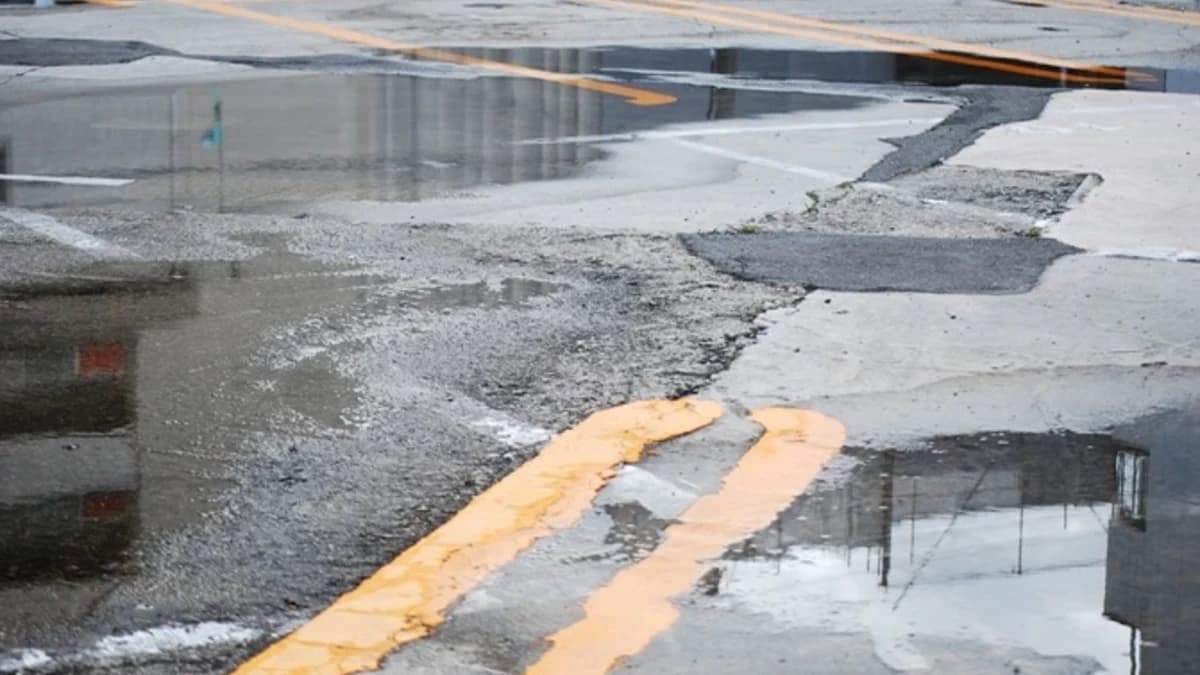
Why does water still stand in my Warwick lot after it was regraded?

Almost certainly because the constraint is downstream of the pavement. If the drainage system discharges through an outfall set close to or below high tide, it cannot flow freely at high water no matter how much fall you build into the surface. Adding slope moves water to the low point faster; it does not give it anywhere to go. The productive questions are where the outfall is, what elevation it sits at, and whether the system needs storage, a different discharge, or a backflow arrangement.

Why do the edges of my South County lot break up before the middle does?

Glacial outwash sand drains extremely well and supports almost nothing sideways. At an unconfined edge there is very little holding the asphalt in place when a vehicle runs the perimeter, and runoff sheeting off the edge steadily removes the soil beneath it. The result is cracking parallel to the edge working inward while the interior stays serviceable. Curb, a thickened edge, or a properly compacted stabilized shoulder addresses the cause; repatching the same strip does not.

Why does reconstruction cost more on Providence-area properties?

Because these parcels have been built on, dug up, and refilled for centuries, and what is under the pavement is frequently unknown. Historic fill placed without engineered compaction, poorly backfilled utility trenches, and buried foundations or abandoned lines all produce settlement that follows straight lines rather than traffic patterns. Add tight staging space and limited truck access, and both the risk and the logistics cost rise. Test pits before pricing are the single most useful step on an urban Rhode Island reconstruction.

Does salt air actually damage pavement in Rhode Island?

It affects the components around the pavement more than the asphalt itself. Chloride-laden air accelerates corrosion of frames, grates, fasteners, bollards, and reinforcement, and it compounds the chloride load that winter deicing already applies. Asphalt is relatively tolerant of salt; concrete surfaces and metal features are not. On waterfront and Aquidneck Island properties, material selection for those components is worth a specific conversation rather than a default.

Is sealcoating a good idea on a Rhode Island parking lot?

On sound asphalt it slows oxidation and keeps the surface uniform, which has value in a climate that cycles through freezing repeatedly. On pavement already cracking through to the base it accomplishes little and can obscure the condition an assessment needs to see. It is not a substitute for crack sealing, which is the higher-value treatment here. In South County groundwater protection areas, check what may actually be applied at your address before assuming a particular product is available.

When can paving be done in Rhode Island?

Broadly spring through fall, with the coast usually offering more workable days at both ends than the Blackstone Valley and the northwest uplands. There is no fixed date at which paving stops being possible. What decides a given day is the specific product's stated requirements, surface and overnight temperatures, humidity, the rain forecast, plant availability, and the specification. For coastal and seasonal properties the harder constraint is usually occupancy: the best weather coincides with the months a lot cannot be closed.

Browse cities in Rhode Island

Browse services in Rhode Island

Related reading for Rhode Island property owners

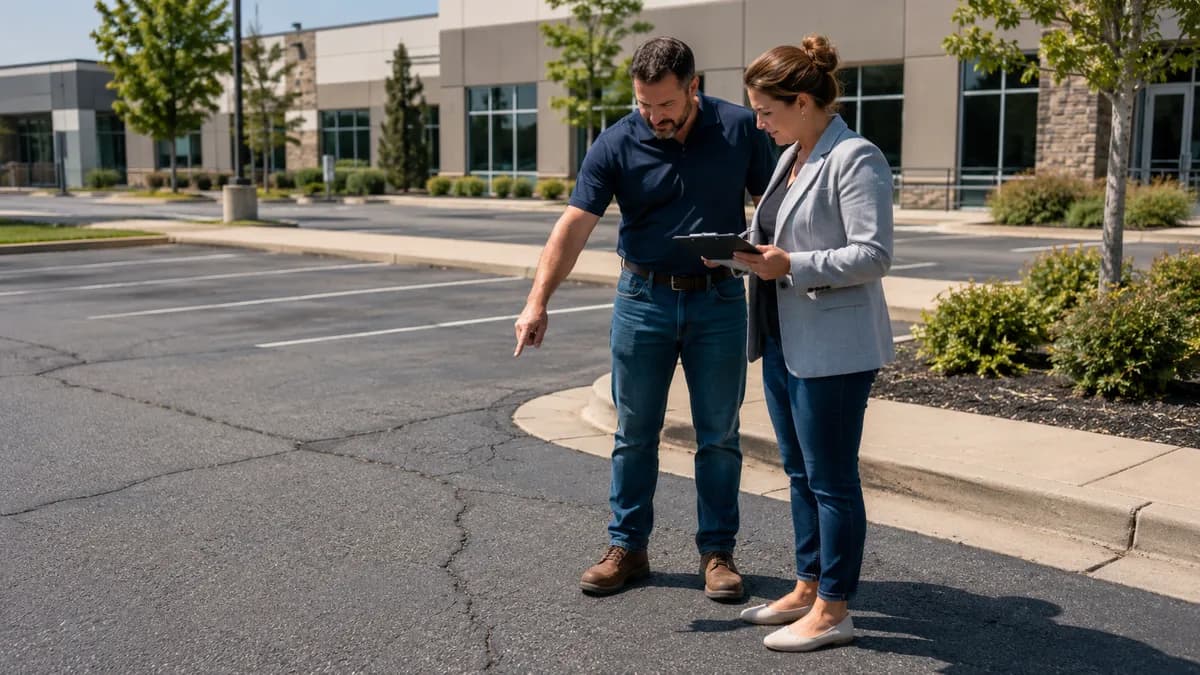
Property manager and asphalt paving contractor reviewing a cracked commercial parking lot together.
Contractor Hiring Guides

Property-owner guide

Updated July 6, 2026

How to Choose an Asphalt Paving Contractor

How to choose an asphalt paving contractor: project fit, relevant experience, written scope, references, insurance, and pavement qualifications.

Read guide
Property manager and paving contractor reviewing marked repair limits, a pavement core, and a site sketch on a clipboard.
Contractor Hiring Guides

Property-owner guide

Updated July 6, 2026

Questions to Ask an Asphalt Paving Contractor Before Hiring

Questions to ask an asphalt paving contractor before hiring: scope, thickness, base, drainage, access, schedule, striping, and exclusions.

Read guide
Standing water pooled near a parking lot drain inlet after rainfall.
Drainage & Sitework

Property-owner guide

Updated July 6, 2026

Parking Lot Drainage Problems: What Property Owners Should Know

Common causes of parking lot drainage problems, why they accelerate pavement damage, and what property owners should ask contractors before a fix.

Read guide
Drainage & Sitework

Property-owner guide

Updated July 12, 2026

Parking Lot Drainage Solutions

Parking lot drainage solutions explained: regrading, catch basins, trench drains, French drains, and permeable options, and how to match fix to problem.

Read guide
Raised, offset sidewalk panel creating a trip hazard outside a commercial building, with panels summarizing common causes, repair options such as grinding, slab leveling, and patching, and liability considerations.
Concrete Repair

Property-owner guide

Updated July 11, 2026

Concrete Trip Hazards: Causes, Fixes, and Liability

What causes concrete trip hazards on sidewalks, how they are fixed by grinding, cutting, slab lifting, or replacement, and the ADA and liability stakes.

Read guide
Deep black, evenly sealcoated apartment complex parking lot in sound condition.
Sealcoating

Property-owner guide

Updated July 6, 2026

When Is Sealcoating Worth It?

When sealcoating provides real value as preventive asphalt maintenance, and the pavement conditions where it makes the most sense.

Read guide

Rhode Island Agencies and Reference Links

This page summarizes publicly available information for general education. It is not legal, engineering, or code-compliance advice, and requirements change. Confirm anything that affects your project with the agency with jurisdiction over the property.

Regulatory content last reviewed:

For contractors

Are you a pavement contractor in Rhode Island?

Get listed where property managers, owners, and facility teams search by state, city, and service.