

What this guide covers
Striping wears out on a cycle, and the trigger to restripe is usually one of a few clear signs: faded lines, a fresh sealcoat, worn safety or ADA markings, or a layout that no longer matches how the lot is used.
This guide covers those signs and rough timing so you can budget restriping instead of waiting until the lot looks neglected. When it's time, browse striping and pavement marking contractors.
Restriping is usually paired with a sealcoat — see the parking lot maintenance cost guide for how the two fit a maintenance cycle.
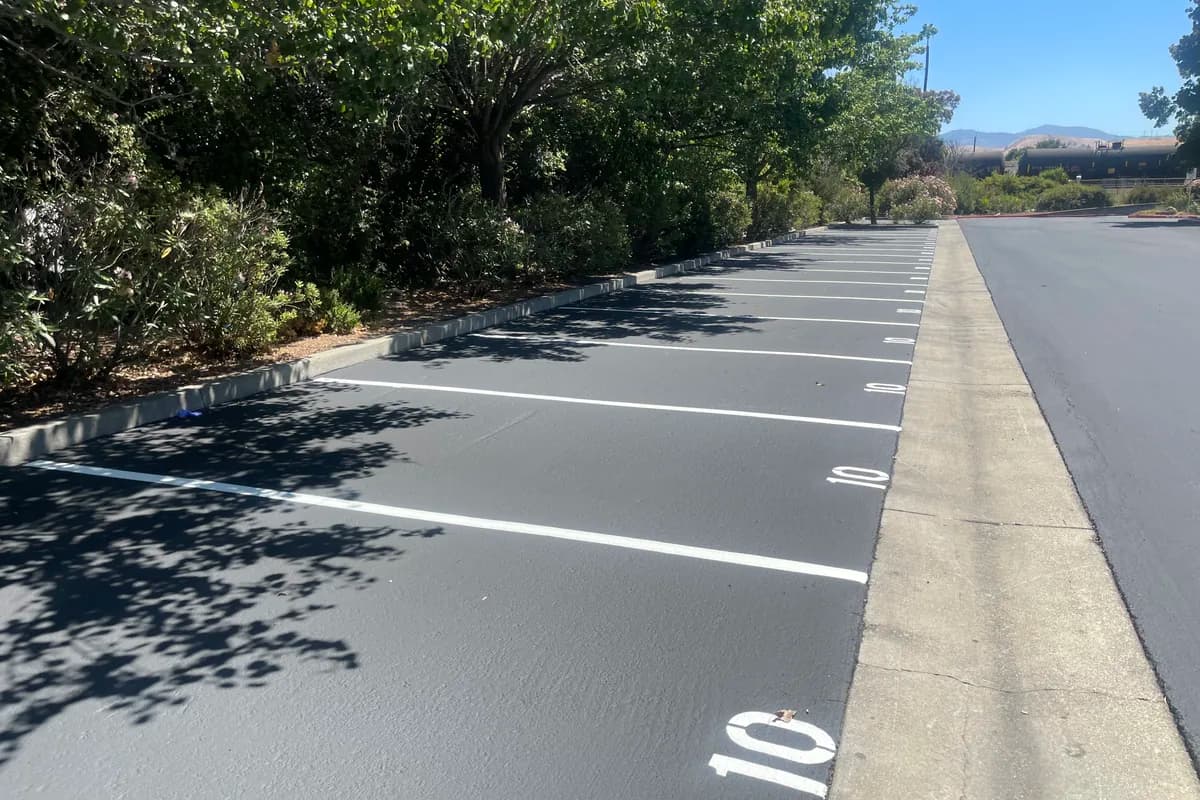
Signs it's time to restripe
A few clear signals mean the lot is due:
- Lines are faded, patchy, or hard to see in low light or when wet
- Accessible-parking symbols, access aisles, or signage markings have worn
- Fire-lane and no-parking markings are no longer clearly visible
- The lot was just sealcoated or resurfaced, covering the old lines
- Traffic flow, stall count, or use has changed and the layout no longer fits
- Drivers are parking inconsistently because markings are unclear
How often restriping is typically needed
There's no single interval — it depends on traffic volume, sun exposure, winter plowing, and the marking material. High-traffic commercial lots commonly need restriping every 1 to 3 years; lighter-use lots can go longer. Thermoplastic and other durable materials last longer than standard paint, which can stretch the cycle on the markings that use them.
The practical approach is to inspect annually and restripe on condition rather than a fixed calendar, and to align restriping with the sealcoat cycle so both happen in one mobilization.
Prioritize safety and accessibility markings
Not all faded lines carry the same weight. Ordinary stall lines are mostly about order and appearance. Accessible-parking markings, access aisles, and fire lanes carry safety and compliance weight, so worn versions of those should move up the priority list. Restriping refreshes the markings, but it does not by itself resolve an underlying accessibility problem such as incorrect stall dimensions or slope — treat compliance as a separate question from repainting.
Plan restriping with sealcoating
Because sealcoating covers existing lines, restriping almost always follows a sealcoat. Planning them together saves a mobilization and keeps the lot looking maintained. Striping goes on after the fresh sealcoat has cured. If you're budgeting a maintenance program, treat restriping as a recurring line item tied to the seal cycle rather than a surprise.
Frequently asked questions
How often should a parking lot be restriped?
It varies with traffic, sun, and plowing, but high-traffic commercial lots often need restriping every 1 to 3 years. Inspect annually and restripe on condition rather than a fixed date.
Do I need to restripe after sealcoating?
Yes. Sealcoating covers the existing lines, so restriping follows once the fresh sealcoat has cured. Plan the two together to save a mobilization.
Which markings are most important to restripe?
Accessible-parking markings, access aisles, and fire lanes, because they carry safety and compliance weight. Ordinary stall lines are mostly about order and appearance.
Does restriping fix an ADA problem?
No. Repainting refreshes the markings but does not resolve an underlying issue like incorrect stall dimensions or slope. Treat compliance as a separate question from restriping.
Before you hire: The Pavement Directory does not provide legal or compliance advice. ADA and accessibility requirements vary by site, jurisdiction, and project scope. Contractors may perform striping, grading, concrete, or asphalt corrections, while CASp inspectors or accessibility consultants may be needed for compliance review. Consult qualified professionals when compliance is material.
For property owners
Looking for a pavement contractor?
Use The Pavement Directory to search asphalt, concrete, sealcoating, striping, ADA access, and pavement maintenance contractors by service and location. Always verify license, insurance, references, and written scope before hiring.
Search contractorsFor contractors
Are you a pavement contractor?
Contractors can add or claim a company profile to help property owners find pavement professionals by service, location, and specialty.