

What this guide covers
Sealcoating is maintenance, not reconstruction. New asphalt usually needs time before sealcoating, cracks and oil spots should be handled before coating, and the driveway must stay closed while the sealer cures.
This guide is part of the sealcoating hiring hub — for the general contractor-selection process, see How to Choose a Sealcoating Contractor.
Planning a DIY quantity? Measure the driveway, then use the Sealcoating Calculator with the selected product's coverage rate.
Offered a same-day sealing job at the door? A coat sprayed on in minutes with no cleaning is a common scam — see driveway paving and sealing scams.
Related contractor categories
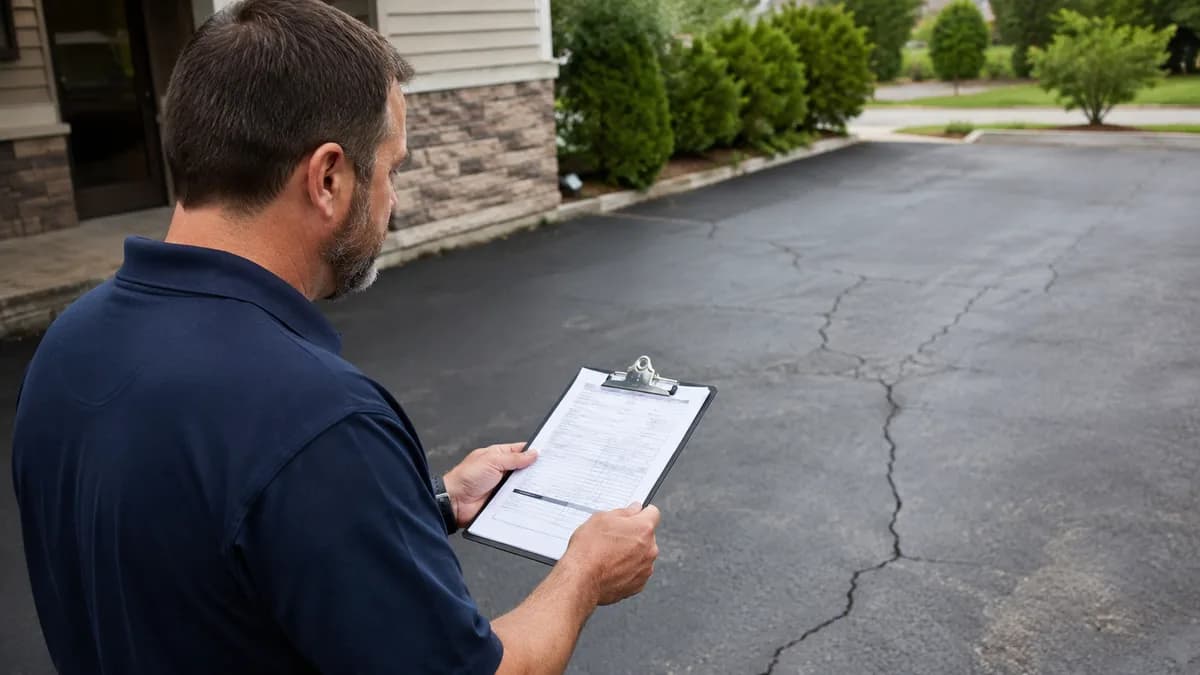
What driveway sealcoating does
Sealcoating adds a protective coating to asphalt. It can slow surface oxidation, darken the driveway, improve appearance, and help reduce water penetration at the surface — it does not restore failed pavement structure.
If the driveway has potholes, severe alligator cracking, sinking, or drainage failure, review Asphalt Paving Contractors before sealcoating.
When driveway sealcoating makes sense
Sealcoating may make sense when asphalt is faded but mostly sound, cracks are limited and can be filled, surface raveling is minor, drainage is acceptable, there are no major potholes, the driveway has aged enough after paving, and the owner wants a cleaner, darker finish. It's less useful on driveways that are already breaking apart.
Fresh asphalt contains oils that need time to cure, and sealcoating too soon can interfere with normal curing and may create surface problems. Ask the paving contractor or sealcoating contractor for timing based on your climate, driveway use, and asphalt mix.
Preparation, cracks, and oil spots
Preparation should include removing vehicles and stored items, cleaning dirt and debris, trimming grass at edges, removing leaves, cleaning oil spots, filling suitable cracks, protecting garage doors, concrete, pavers, and landscaping, and checking weather. A rushed prep job can show in the finished result.
Small linear cracks may be filled; large cracks, alligator cracking, potholes, and settled areas may need repair instead. Heavy oil contamination can prevent sealer from bonding — a contractor may clean, prime, exclude, or recommend repair depending on severity.
DIY vs. professional sealcoating
DIY is not automatically wrong — the risk is under-prep, poor weather timing, uneven application, and opening the driveway too soon.
| Option | Better fit |
|---|---|
| DIY | Small driveway, light wear, minimal cracks, homeowner accepts basic finish |
| Contractor | Larger driveway, many cracks, oil spots, edge work, stronger finish expectations |
| Repair first | Potholes, alligator cracking, sinking, drainage failure |
Cure time and vehicle use
The driveway should remain closed until the coating cures enough for traffic. Cure time depends on temperature, humidity, sun exposure, shade, material, application thickness, and number of coats. Avoid turning tires sharply on fresh sealer after reopening — hot tires and tight turns can mark the surface.
Frequently asked questions
Is driveway sealcoating worth it?
It can be useful for sound asphalt that is faded, lightly worn, and still draining properly. It is not useful as a substitute for repair.
Can I sealcoat my driveway myself?
Yes, for small and simple driveways. Larger driveways, cracks, oil spots, and finish expectations may justify hiring a contractor.
Should cracks be filled first?
Yes, suitable cracks should usually be filled before coating. Failed areas may need repair instead.
Can sealcoating fix potholes?
No. Potholes require asphalt repair.
How long before I can drive on a sealcoated driveway?
Timing depends on weather, material, shade, and application thickness. Follow the contractor's written guidance.
Before you hire: The Pavement Directory does not guarantee contractor performance, pricing, licensing, insurance, or availability. Business information may be submitted by contractors or gathered from public sources and should be independently verified before hiring. Always confirm licensing, insurance, references, scope of work, and written contract terms.
For property owners
Looking for a pavement contractor?
Use The Pavement Directory to search asphalt, concrete, sealcoating, striping, ADA access, and pavement maintenance contractors by service and location. Always verify license, insurance, references, and written scope before hiring.
Search contractorsFor contractors
Are you a pavement contractor?
Contractors can add or claim a company profile to help property owners find pavement professionals by service, location, and specialty.