

What this guide covers
The marking material is a real decision, not a detail: paint is cheaper and easy to refresh, while thermoplastic costs more but lasts longer and stays visible under heavy traffic.
This guide compares the two so you can tell whether a contractor's proposal fits your lot. For pricing context, see the parking lot striping cost guide.
Not sure who to hire? Start with how to choose a parking lot striping contractor, or browse parking lot striping contractors.
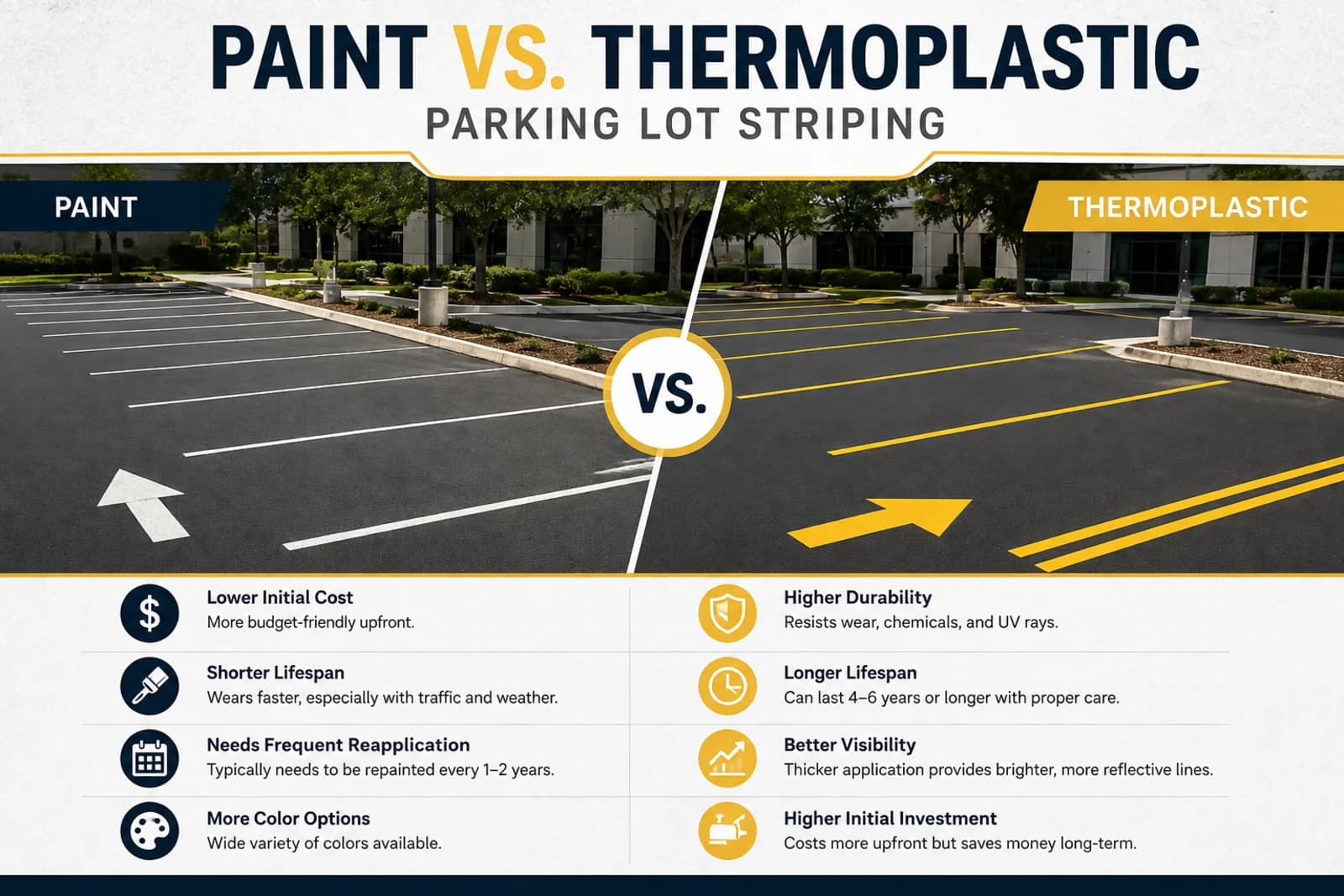
Paint vs. thermoplastic at a glance
The two materials trade up-front cost against durability and visibility:
| Factor | Water-based paint | Thermoplastic |
|---|---|---|
| Up-front cost | Lower | Higher |
| Durability | Wears faster; refreshed periodically | Thicker, longer-lasting |
| Visibility | Good when fresh | Often reflective; strong night/wet visibility |
| Best for | Standard stall lines, budget restripes | High-traffic markings, crosswalks, symbols |
| Cost over time | Lower per application, more often | Higher per application, less often |
When paint makes sense
For most ordinary stall lines on a lot that's restriped on a regular cycle, water-based paint is the practical, economical choice. It goes down quickly, dries fast enough to reopen areas soon, and is easy to refresh when it fades or after a sealcoat. If you're already restriping every couple of years as part of maintenance, paint often gives the best value.
Mixing materials and matching the surface
Many lots don't choose one material for everything — they use paint for standard stalls and thermoplastic for high-wear, high-visibility markings. What matters is that the material suits the surface and traffic and is applied to a clean, cured surface. A contractor who proposes a sensible mix, and can explain it, is usually giving better advice than one who applies the same product everywhere by default.
Frequently asked questions
Is thermoplastic better than paint for parking lot striping?
Not universally. Thermoplastic is more durable and visible, which suits high-traffic markings and crosswalks, but paint is cheaper and fine for standard stall lines that are restriped periodically. Many lots use both.
Why is thermoplastic more expensive?
It's a thicker, heat-applied material that lasts longer and is often reflective. It costs more per application but can lower the cost per year on markings that would otherwise need frequent repainting.
Can you use paint and thermoplastic in the same lot?
Yes, and many lots do — paint for ordinary stalls and thermoplastic for high-wear, high-visibility markings like crosswalks, arrows, and main drive lanes.
Does the striping material need special surface prep?
Both need a clean, cured surface to bond well. If the lot is being sealcoated, striping goes on after the fresh sealcoat has cured.
Before you hire: The Pavement Directory does not guarantee contractor performance, pricing, licensing, insurance, or availability. Business information may be submitted by contractors or gathered from public sources and should be independently verified before hiring. Always confirm licensing, insurance, references, scope of work, and written contract terms.
For property owners
Looking for a pavement contractor?
Use The Pavement Directory to search asphalt, concrete, sealcoating, striping, ADA access, and pavement maintenance contractors by service and location. Always verify license, insurance, references, and written scope before hiring.
Search contractorsFor contractors
Are you a pavement contractor?
Contractors can add or claim a company profile to help property owners find pavement professionals by service, location, and specialty.