

What this guide covers
Concrete repair covers very different jobs — a quick grind, a slab lift, a patch, or a full tear-out — so the first thing to confirm is that the contractor diagnoses the cause and matches the method to it.
This is the hiring anchor for the concrete hub. For the specific verify-before-you-sign list use the concrete repair contractor checklist, and see the concrete repair cost guide for pricing by method.
Ready to compare companies? Compare concrete repair contractor profiles by market and specialty.
Confirm they diagnose before they quote
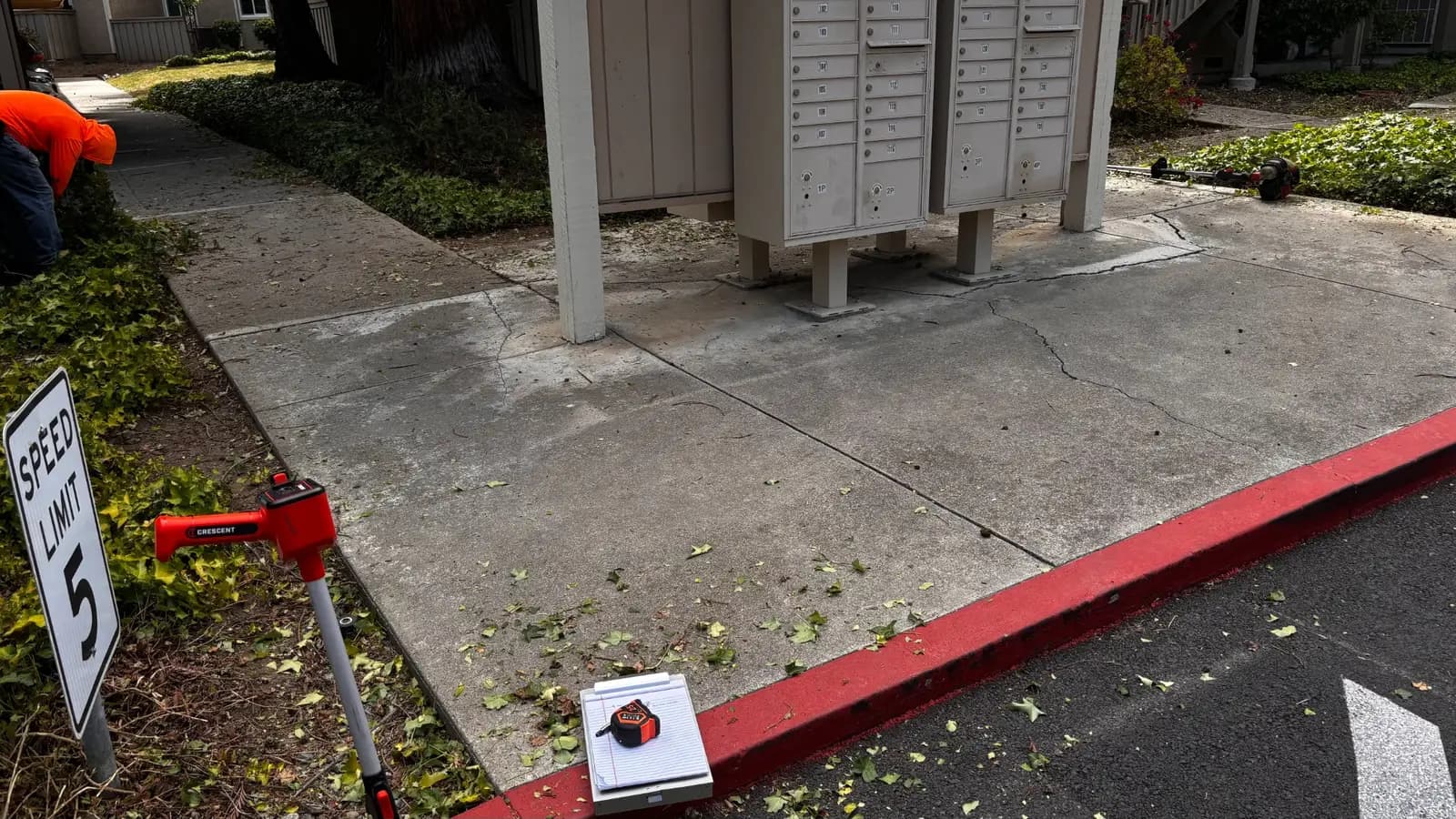
The most important difference between concrete contractors is whether they diagnose the cause or just quote a fix. A settled slab caused by an eroding base or a drainage problem will settle again if you only replace the concrete. A good contractor looks at why the concrete failed — settlement, freeze-thaw, tree roots, poor drainage, or heavy loads — before recommending what to do about it.
Match the contractor to the repair method
Concrete repair methods vary widely in cost and skill. A contractor should fit the method to the damage, and a contractor who only does one thing may push that solution even when a cheaper one would work.
| Repair | Better fit | Watch for |
|---|---|---|
| Trip-hazard grinding | Contractor with grinding equipment | Being sold full replacement instead |
| Slab lifting | Mudjacking / foam specialist | Lifting a slab that's actually broken |
| Sidewalk / slab replacement | Flatwork and finishing experience | Poor finish match to existing concrete |
| Curb & gutter | Formwork and drainage-profile experience | Ignoring the drainage the curb controls |
| ADA-area work | Familiar with accessible-route requirements | Treating compliance as just a physical fix |
Judge the finish and the details
Concrete is unforgiving — bad finishing shows for the life of the slab. Ask to see recent work and look at surface finish, how new concrete meets old, joint placement, and edges. Also confirm the practical details: is demolition and haul-off included, how long must the area stay closed while it cures, and how will they protect surrounding surfaces and landscaping.
Common mistakes when hiring
Avoid these when shortlisting a concrete contractor:
- Choosing replacement when grinding or slab lifting would fix the problem
- Not asking why the concrete failed in the first place
- Accepting a bid that omits demolition, disposal, or cure time
- Ignoring drainage or base issues that will cause the failure to return
- Overlooking finish quality and how new work matches existing concrete
- Assuming a repair resolves an ADA obligation on an accessible route
Frequently asked questions
What's the most important thing when hiring a concrete repair contractor?
That they diagnose the cause before quoting a fix. Concrete that failed from settlement, drainage, or a bad base will fail again if only the surface is replaced.
Should a concrete contractor recommend the cheapest method?
They should recommend the right method for the problem. Sometimes that's an inexpensive grind or slab lift; sometimes it's full replacement. Be cautious of a contractor who only ever proposes the most expensive option.
How do I judge a concrete contractor's quality?
Look at finish on recent work — surface texture, how new meets old, joint placement, and edges — and confirm the scope includes demolition, disposal, and cure time.
Does a concrete repair contractor handle ADA compliance?
They can perform the physical work, but accessible-route compliance is a separate question that varies by jurisdiction and may involve other professionals. Don't assume a repair alone satisfies an ADA obligation.
Before you hire: The Pavement Directory does not guarantee contractor performance, pricing, licensing, insurance, or availability. Business information may be submitted by contractors or gathered from public sources and should be independently verified before hiring. Always confirm licensing, insurance, references, scope of work, and written contract terms.
For property owners
Looking for a pavement contractor?
Use The Pavement Directory to search asphalt, concrete, sealcoating, striping, ADA access, and pavement maintenance contractors by service and location. Always verify license, insurance, references, and written scope before hiring.
Search contractorsFor contractors
Are you a pavement contractor?
Contractors can add or claim a company profile to help property owners find pavement professionals by service, location, and specialty.