

What this guide covers
The simplest way to keep them straight: crack sealing treats the cracks, sealcoating treats the surface. They solve different problems, which is why one can't substitute for the other.
This guide explains what each does and why they're usually done together. Compare crack sealing contractors and sealcoating contractors for the work.
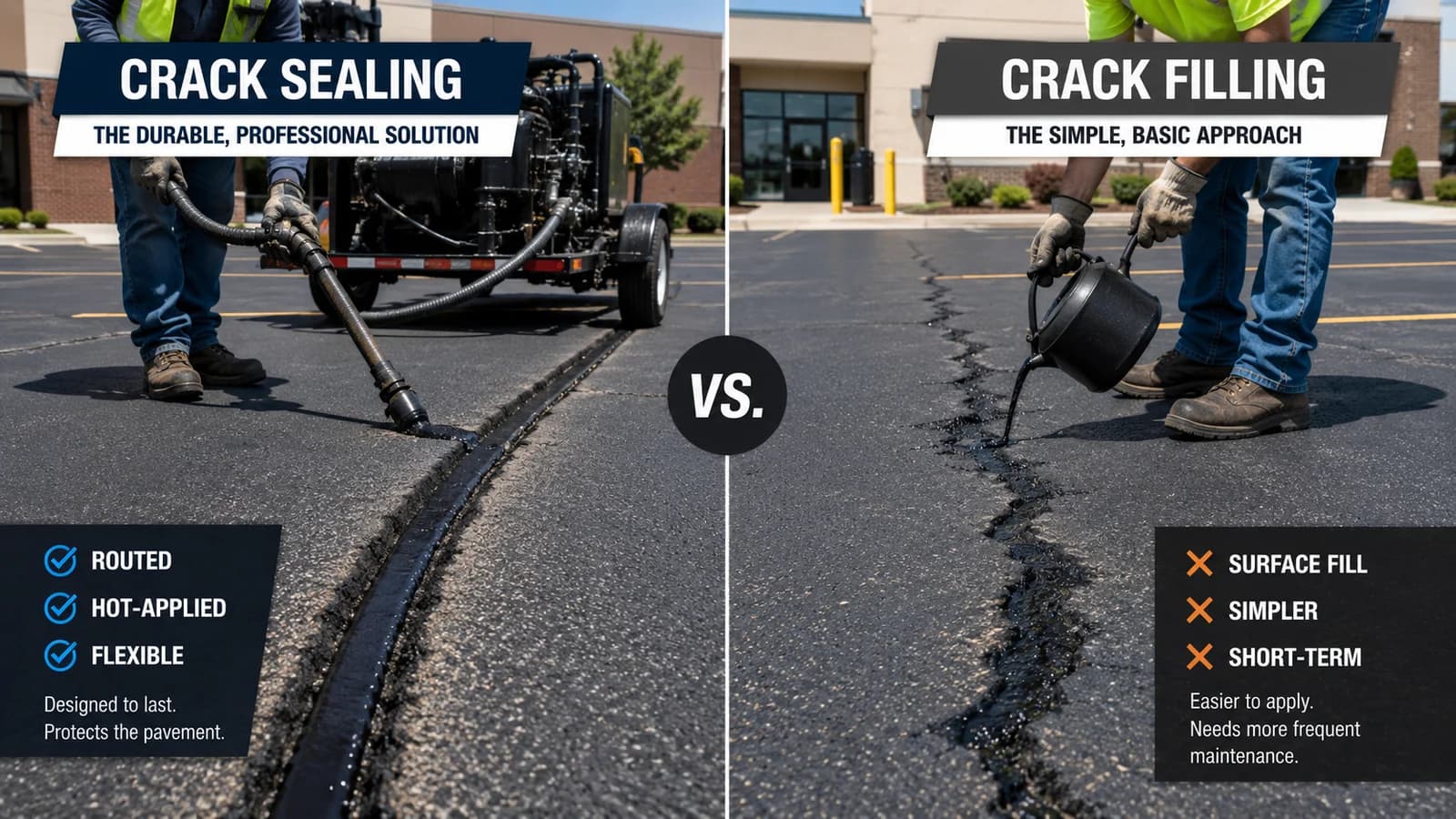
For deeper detail on each, see when is sealcoating worth it and crack sealing vs. crack filling.
Related contractor categories
What each one does
They target different parts of the pavement:
| Factor | Crack sealing | Sealcoating |
|---|---|---|
| Treats | Individual cracks | The whole surface |
| Purpose | Keep water out of cracks and base | Slow oxidation, resist water and fuel |
| Material | Flexible (often hot-applied) sealant | Thin coating rolled or sprayed on |
| Fixes cracks? | Yes, seals them | No — does not fill or bridge cracks |
| Protects surface? | No | Yes |
Why one can't replace the other
A common misconception is that sealcoating will 'seal the cracks.' It won't — a thin surface coating flows into and over a crack but doesn't fill it or stop it from working, so water still gets in. Likewise, crack sealing protects only the cracks it's applied to, not the broad surface that oxidizes and wears. Using one where the other is needed leaves a real problem unaddressed.
Why they're usually done together
Because they cover different needs, a typical maintenance visit does both: seal the cracks, then sealcoat the surface. Doing them in one mobilization is efficient and leaves the lot both crack-sealed and surface-protected. The order matters — cracks are sealed first and allowed to cure, then the sealcoat goes over the top.
How they fit a maintenance plan
Crack sealing is typically done more often (new cracks form yearly), while sealcoating is on a longer cycle (commonly every 2 to 4 years). A simple plan seals cracks annually and sealcoats on its cycle, restriping afterward. Together they make up most of a basic pavement maintenance program — see the parking lot maintenance cost guide.
Frequently asked questions
What's the difference between crack sealing and sealcoating?
Crack sealing fills individual cracks to keep water out; sealcoating applies a thin protective coating over the whole surface. They solve different problems and aren't interchangeable.
Does sealcoating seal cracks?
No. Sealcoating is a thin surface coating that doesn't fill or bridge cracks. Cracks need separate crack sealing to keep water out.
Do I need both crack sealing and sealcoating?
Often yes. Most lots benefit from sealing the cracks and coating the surface, since each addresses a different problem. They're commonly done in the same visit.
Which is done first, crack sealing or sealcoating?
Crack sealing first. The cracks are sealed and allowed to cure, then the sealcoat is applied over the surface.
Before you hire: The Pavement Directory does not guarantee contractor performance, pricing, licensing, insurance, or availability. Business information may be submitted by contractors or gathered from public sources and should be independently verified before hiring. Always confirm licensing, insurance, references, scope of work, and written contract terms.
For property owners
Looking for a pavement contractor?
Use The Pavement Directory to search asphalt, concrete, sealcoating, striping, ADA access, and pavement maintenance contractors by service and location. Always verify license, insurance, references, and written scope before hiring.
Search contractorsFor contractors
Are you a pavement contractor?
Contractors can add or claim a company profile to help property owners find pavement professionals by service, location, and specialty.