

What this guide covers
Crack sealing is priced per linear foot, and the price moves with crack size, prep (routing), and whether the contractor uses a durable hot-applied rubberized sealant or a cheaper cold-pour filler.
This guide explains what a fair crack sealing price includes and why it is the highest-return maintenance dollar you can spend on pavement. For quotes, compare crack sealing contractors who will measure the cracks first.
Crack sealing is often bundled with sealcoating, but they do different jobs — see how the two compare in the sealcoating cost guide.
Related contractor categories
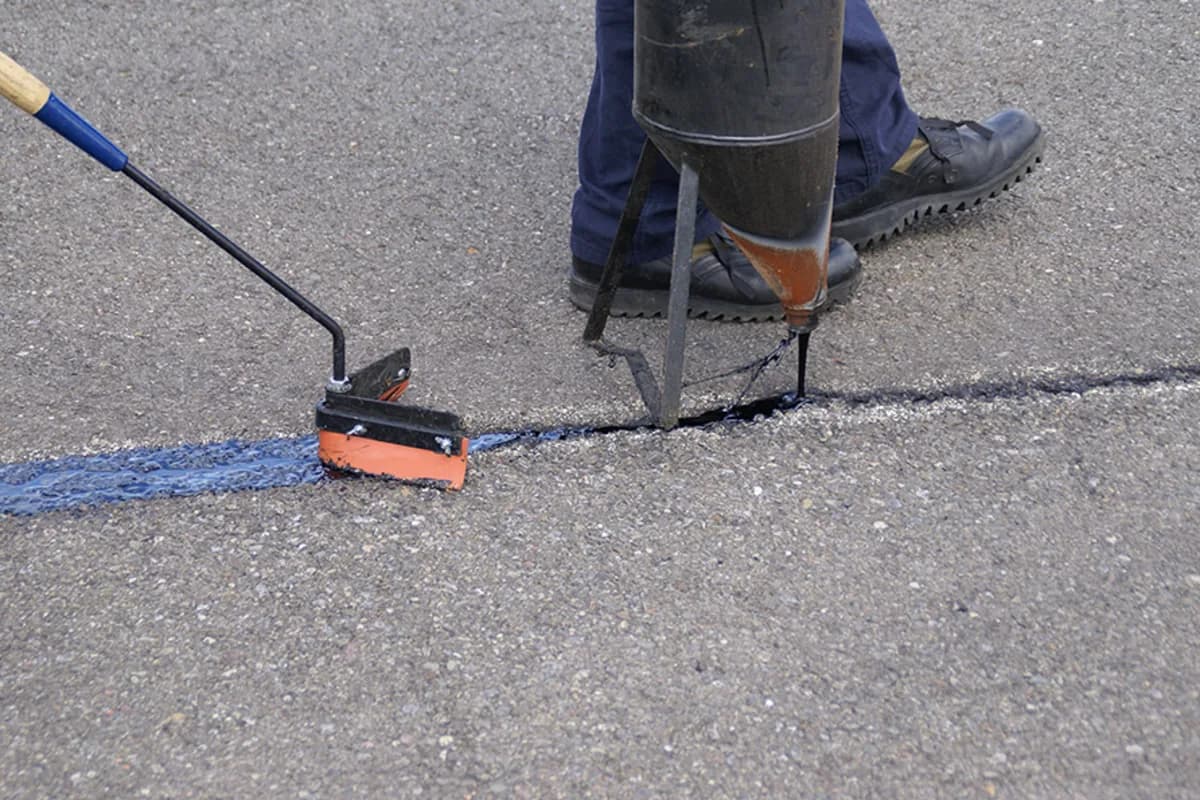
Typical crack sealing price ranges
These are broad national planning ranges for professional application, not quotes. Because crack work is measured by length, a lot with a lot of cracking naturally costs more, and minimum fees make small jobs cost more per foot.
| Item | Typical range | Notes |
|---|---|---|
| Cold-pour crack filling | $0.50 – $1.50 / linear ft | Lower cost, shorter life; common on light-duty surfaces |
| Hot-applied rubberized sealing | $1.00 – $3.00 / linear ft | Flexes with the pavement; longer lasting |
| Routing / sawing cracks first | adds $0.25 – $1.00 / linear ft | Improves adhesion on wider cracks |
| Small job minimum | $200 – $500 flat | Minimum mobilization fee on small lots |
Filling vs. sealing — and why it matters to price
Crack filling places material into a crack to block water. Crack sealing usually means a hot-applied rubberized product, often over a routed (cleaned and shaped) crack, that bonds to the walls and flexes as the pavement moves through temperature cycles. Sealing costs more but lasts longer, especially on working cracks that open and close seasonally.
The right choice depends on the pavement. Fine, non-working cracks may only need filling; wider or active cracks benefit from routing and hot-applied sealant. A contractor should be able to explain which they are proposing and why.
Why crack sealing is the cheapest dollar in pavement care
Water entering cracks is the leading cause of pavement failure — it undermines the base, freezes and expands, and turns hairline cracks into potholes and alligator cracking. Sealing a crack for a dollar or two per foot defers repairs that cost many times more per square foot. That is why a maintenance program almost always crack-seals on a regular cycle rather than waiting for failure.
Crack sealing does not fix pavement that has already failed structurally. Where cracking has progressed to crumbling or alligatoring, patching or repair is the right spend — see the concrete repair cost guide for adjacent hard-surface repair pricing, or talk to paving contractors about asphalt patching.
Budgeting crack sealing as a recurring line item
Because new cracks form every year, crack sealing is best budgeted annually or on a short cycle, not as a one-time cost. On a managed property, a modest yearly crack-sealing budget is one of the most cost-effective ways to extend pavement life and delay resurfacing. Pair it with a sealcoat cycle and you have most of a basic maintenance plan — see parking lot maintenance cost.
Frequently asked questions
How much does crack sealing cost per linear foot?
Crack sealing typically runs about $0.50 to $3.00 per linear foot. Cold-pour filling is at the low end; hot-applied rubberized sealing, especially with routing, is at the high end.
Is crack sealing the same as sealcoating?
No. Crack sealing places material into individual cracks to block water; sealcoating is a thin protective film over the whole surface. They are priced separately and do different jobs.
Is hot-applied crack sealant worth the extra cost?
Usually yes on working cracks. Hot-applied rubberized sealant flexes with the pavement and lasts longer than cold-pour filler, which often makes it cheaper over time.
How often should cracks be sealed?
Because new cracks form each year, crack sealing is best done on a regular cycle — commonly annually — as part of a maintenance program rather than a one-time job.
Before you hire: Costs vary by region, project size, access, materials, labor, traffic control, disposal, site conditions, and scope. Use written proposals and contractor-specific pricing before making decisions.
For property owners
Looking for a pavement contractor?
Use The Pavement Directory to search asphalt, concrete, sealcoating, striping, ADA access, and pavement maintenance contractors by service and location. Always verify license, insurance, references, and written scope before hiring.
Search contractorsFor contractors
Are you a pavement contractor?
Contractors can add or claim a company profile to help property owners find pavement professionals by service, location, and specialty.