

What this guide covers
Concrete repair is not one price — a trip-hazard grind, a patch, slab lifting, and full removal-and-replacement are very different jobs with very different costs, so the method matters more than the area.
This guide explains the main repair methods and their typical ranges so you can match the fix to the problem. For quotes, compare concrete repair contractors who can inspect the damage first.
Concrete trip hazards and accessible-route issues can also be ADA matters — see the disclaimer below before assuming a repair resolves compliance.
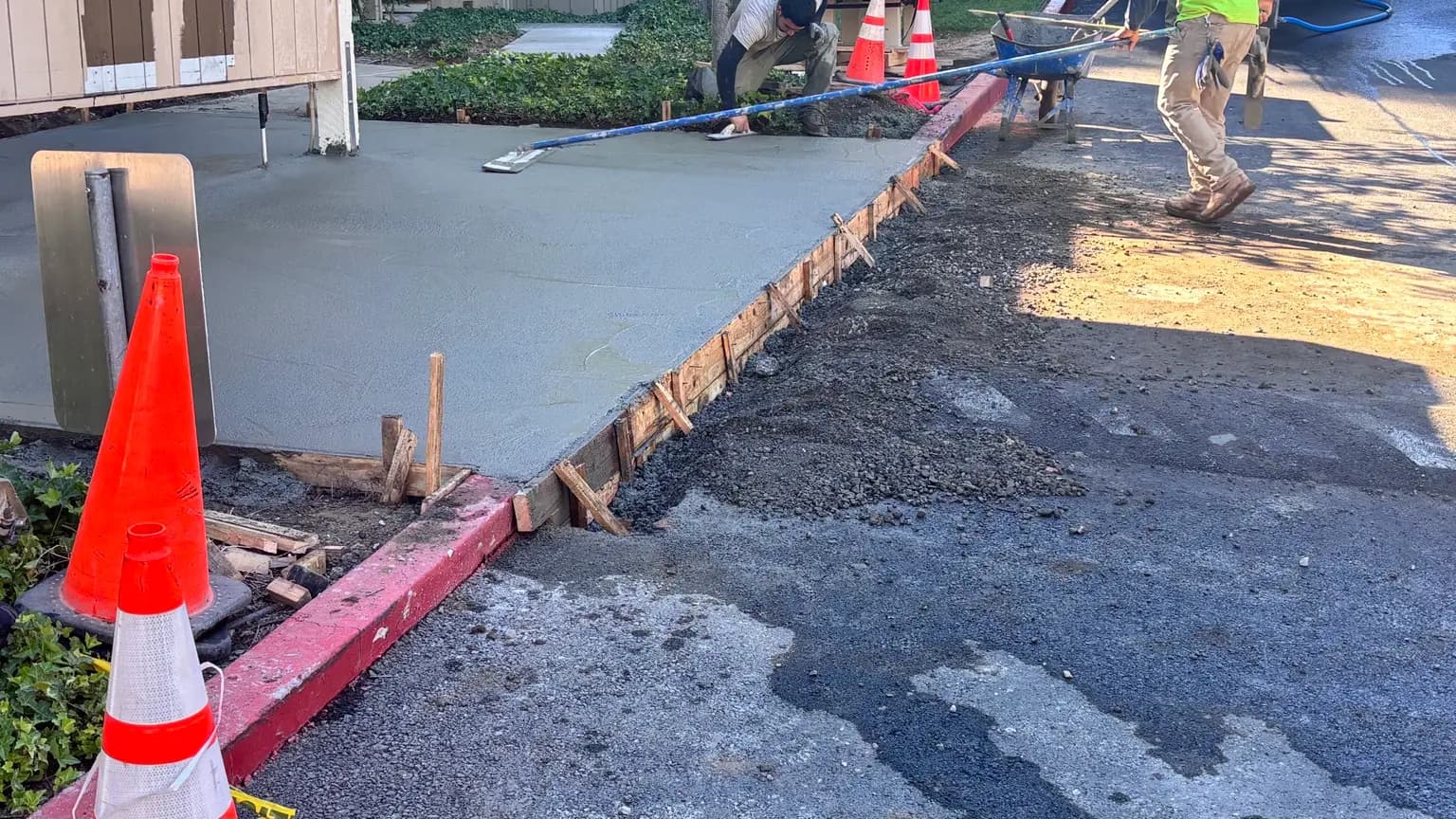
Typical concrete repair price ranges
These are broad national planning ranges, not quotes. Concrete work is labor- and disposal-intensive, and access, thickness, and reinforcement all move the number.
| Repair type | Typical range | Notes |
|---|---|---|
| Trip-hazard grinding | $50 – $150 / location | Far cheaper than replacement where it applies |
| Sidewalk removal & replacement | $8 – $15+ / sq ft | Includes demo, disposal, forming, and pour |
| Curb & gutter replacement | $30 – $60 / linear ft | Depends on profile and access |
| Slab lifting (mudjacking / foam) | $5 – $15 / sq ft | Lifts settled slabs without replacement |
| Small job minimum | $300 – $800 flat | Minimum mobilization on small repairs |
Match the method to the problem
The biggest cost decision is which repair method fits the damage — choosing replacement when grinding or lifting would do can multiply the cost unnecessarily, while patching a structurally failed slab just delays the real fix.
- Trip hazard from a lifted joint — grinding or cutting is often enough and is the cheapest option.
- Settled but intact slab — slab lifting (mudjacking or polyurethane foam) can raise it for far less than replacement.
- Cracked, spalled, or broken slab — removal and replacement is usually the durable fix.
- Surface flaking (spalling) — resurfacing or patching may work if the slab is otherwise sound.
- Curb damage — sectional replacement priced by linear foot.
What drives concrete repair cost
Beyond the method, the price moves with:
- Slab thickness and reinforcement — thicker, rebar-reinforced concrete costs more to remove and replace.
- Access — hand-work, stairs, and tight areas add labor versus drive-up areas.
- Disposal — hauling off broken concrete adds cost, especially in volume.
- Finish and specification — colored, stamped, or exposed-aggregate finishes cost more than standard broom finish.
- Quantity — larger jobs lower the unit price; single small repairs hit minimum fees.
- Cure time and traffic control — areas that must stay closed while concrete cures add coordination.
A note on ADA and trip hazards
Uneven sidewalks, curb ramps, and changes in level along an accessible route are not only trip hazards — they can be accessibility issues governed by requirements that vary by jurisdiction and project. A cheap grind may remove the immediate hazard without resolving an accessible-route problem. Budget these repairs with that in mind, and treat compliance as a separate question from the physical fix. See the ADA parking and accessibility resources before assuming a concrete repair resolves a compliance obligation.
Frequently asked questions
How much does it cost to replace a section of sidewalk?
Sidewalk removal and replacement commonly runs about $8 to $15 or more per square foot, including demolition, disposal, forming, and the new pour. Access and thickness affect the number.
Is grinding a trip hazard cheaper than replacing the concrete?
Usually much cheaper — grinding a trip hazard often runs about $50 to $150 per location, versus several times that to remove and replace the slab. It only works where the slab is otherwise sound.
What is slab lifting and when is it used?
Slab lifting (mudjacking or polyurethane foam) raises a settled but intact slab back to grade for roughly $5 to $15 per square foot — far less than replacement when the concrete itself is still good.
Why do concrete repair bids vary so much?
Mostly because they assume different methods — grinding, lifting, patching, or full replacement — and different access and disposal. Compare the method first, then the price.
Before you hire: Costs vary by region, project size, access, materials, labor, traffic control, disposal, site conditions, and scope. Use written proposals and contractor-specific pricing before making decisions.
For property owners
Looking for a pavement contractor?
Use The Pavement Directory to search asphalt, concrete, sealcoating, striping, ADA access, and pavement maintenance contractors by service and location. Always verify license, insurance, references, and written scope before hiring.
Search contractorsFor contractors
Are you a pavement contractor?
Contractors can add or claim a company profile to help property owners find pavement professionals by service, location, and specialty.