

What this guide covers
Commercial sealcoating needs a written phasing plan — tenants, residents, customers, and employees need advance notice, crack filling and asphalt repair should be reviewed before coating, and reopening too early can damage the coating.
This guide is part of the sealcoating hiring hub — start with How to Choose a Sealcoating Contractor for the full picture.
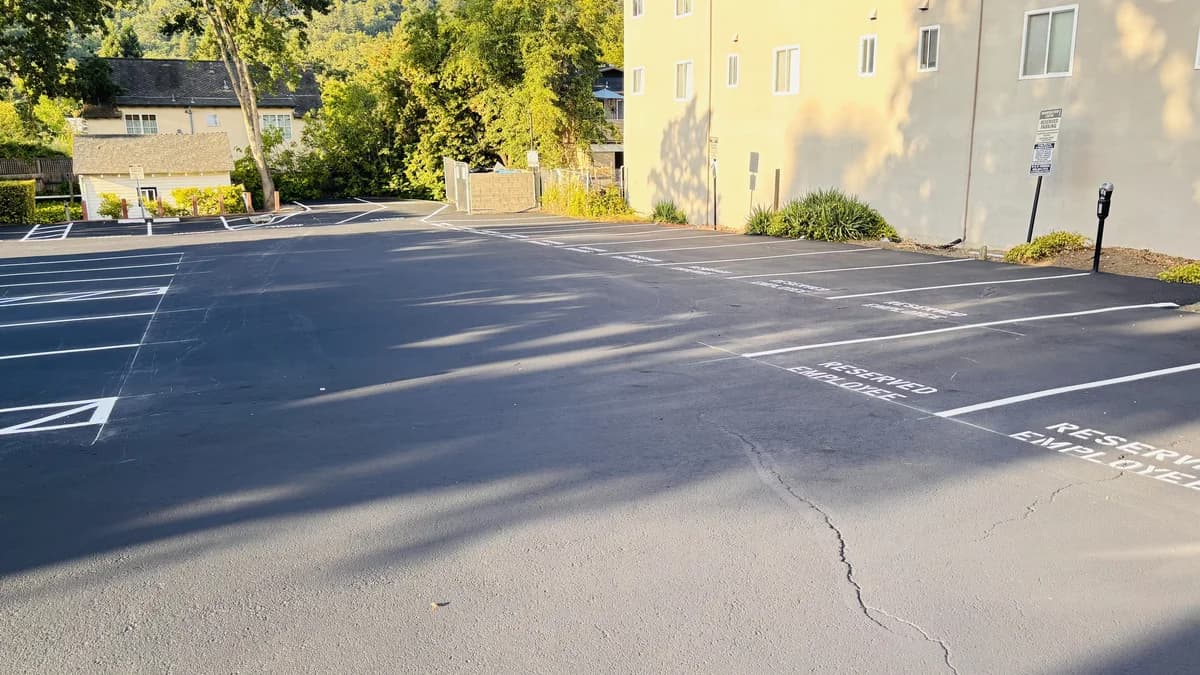
Why commercial sealcoating is different
A driveway may be closed for a day with little coordination. A commercial lot may involve residents, customers, employees, deliveries, emergency vehicles, trash pickup, mail service, security patrols, and ADA parking — commercial sealcoating is part pavement maintenance and part operations planning.
Commercial sealcoating may apply to apartment complexes, HOA parking areas, retail centers, office buildings, industrial parks, schools, medical offices, warehouses, shopping centers, private roads, and mixed-use properties. For larger paved properties, Parking Lot Maintenance Contractors may help coordinate sealcoating with crack sealing, patching, striping, and drainage work.
Inspect pavement before approving coating
Sealcoating should not be used to hide pavement problems. Walk the site and look for alligator cracking, potholes, loose asphalt, rutting, depressions, standing water, failed trench patches, edge failure, oil spots, broken curbs or concrete, and drain failures.
Failed asphalt should be repaired before sealcoating. Use Asphalt Paving Contractors if the lot needs patching first, and review Crack Sealing Contractors for high-crack lots before finalizing the sealcoating scope.
Phasing and access
A commercial sealcoating project should include a clear access plan: will the lot be split into sections, can tenants still enter the property, where will residents park, how will retail customers access stores, how will emergency vehicles enter, how will trash pickup and deliveries be handled, and who provides notices? A poor phasing plan can create more problems than the pavement work itself.
Cure time, reopening, and striping
Sealcoat needs time to cure before traffic returns, and cure time depends on temperature, humidity, sun exposure, shade, material type, application thickness, number of coats, and traffic type. Heavy vehicles, tight turning, and hot weather can mark new sealcoat if the lot opens too soon.
Commercial sealcoating usually requires restriping — coordinate stall lines, ADA stalls, access aisles, fire lanes, arrows, crosswalks, loading zones, red curbs, and signage. Use Parking Lot Striping Contractors when striping is not included.
ADA parking considerations
Sealcoating and striping may affect accessible parking areas — review ADA stall locations, access aisles, slopes, signs, striping layout, curb ramps, the accessible route, and drainage through accessible areas. Sealcoating and striping alone may not resolve ADA issues; consider ADA Parking Contractors or qualified accessibility review where compliance concerns exist.
Frequently asked questions
What makes commercial sealcoating different from driveway sealcoating?
Commercial sealcoating requires phasing, traffic control, notices, striping, access planning, fire lane coordination, and often ADA parking review.
How long should a commercial lot stay closed after sealcoating?
It depends on weather, material, application thickness, shade, and traffic type. Follow the contractor's written reopening plan.
Should cracks be filled before commercial sealcoating?
Usually yes, if the cracks are appropriate for filling. Severe alligator cracking or failed pavement may need repair instead.
Is striping included in commercial sealcoating?
It may be included or excluded. The proposal should state this clearly.
Should ADA stalls be reviewed before restriping?
Yes. Striping ADA stalls without reviewing slopes, access aisles, signs, and routes can leave problems unresolved.
Before you hire: The Pavement Directory does not provide legal or compliance advice. ADA and accessibility requirements vary by site, jurisdiction, and project scope. Contractors may perform striping, grading, concrete, or asphalt corrections, while CASp inspectors or accessibility consultants may be needed for compliance review. Consult qualified professionals when compliance is material.
For property owners
Looking for a pavement contractor?
Use The Pavement Directory to search asphalt, concrete, sealcoating, striping, ADA access, and pavement maintenance contractors by service and location. Always verify license, insurance, references, and written scope before hiring.
Search contractorsFor contractors
Are you a pavement contractor?
Contractors can add or claim a company profile to help property owners find pavement professionals by service, location, and specialty.